Categories
GDD730 - Module 2

Industry Insight – Part 2

Week 10.1 – 30th July. 2021

Experience of Freelancing

Well, where shall I start…This is a major topic for me to talk about, as I have always wanted to give this a try. Ever since I wrote and illustrated my Children’s Books, I had organised what art/ illustration I had to finally show for a portfolio, I thought I was ready to join an agency, and start freelancing..?

However this never happened…

I was determined to give it a go, and I joined an agency called ‘People Per Hour.‘ My experience with this agency was completely different then expected.

They were kind and very helpful, and gave me more details about the freelancing agency, and the process involved. But in-keeping with Phoebe Herring’s Industry experience, I can relate to the part where she mentions;

  • Sending her Artwork, then never hearing back from anyone.
  • Bidding for new opportunities, small jobs to complete, but the rate you are being charged is not worth your time, or patience.
  • Holding back applying for more jobs, just incase the other ones you have bidded for, do come back.

We are asked to consider these questions…

  1. Could your team benefit from employing a freelancer?
  2. What skills and competencies are missing from the team composition?
  3. Do you foresee any issues with employing freelancers so late into the project?

Below are my responses to the above questions.

  1. The way our team has been working together so far, to bring a new person in, even if he/ she had skills that we didn’t, I think would only hinder the teams progress.
  2. The only skills that are missing is a UX designer, however the team has worked it out that as we were not creating an app design, and a game to run on PC and Mac instead, we all checked before hand, what we could or couldn’t do as you can see from (week 2’s composition chart). We were all prepared and knew what needed to be worked on.
  3. Yes for sure, I would never want to employ a freelancer to a project, when you are nearly finished. I don’t see any point, ideally if you needed a certain skill from the beginning, which neither of the team members had, would have been the best time to get someone else on board, as they would need to bond too.

Launchpad Scheme

We are introduced to Warwick New, who had the opportunity to create a startup venture with Falmouth University’s Launchpad Scheme. After watching his video, listed are the key points for; what it offers you, what you can get from creating a startup venture, even if the company fails.??

  • Entrepreneurial Skills – What you need to set up your own tech /startup company.
  • Practise how to sell and market your product – What makes your artefact/prototypes stand out from the rest.

Warwick highlights a few things, which I think we have already got within our current team, 1) believing in your prototype, knowing there is a gap in the market for it. We have believed in our product since we started, but not quite each other.

Warwick clarify’s how important it is to feel motivated about your product, because as soon as you don’t have faith in your product or your team, you are likely to spiral downwards, as then the motivation/ reason of why you were working on this prototype, seems to disintegrate.

Key lessons we have learned.. .so far..?

  • Be open and honest from the start to improve, learn, test, re-make. (move forward for the better).
  • Don’t avoid problems, handle them straight away. (don’t let it fester).
  • Be sure to compliment each others work from time to time. (show you care).

Week 10.2 – 3rd August. 2021

Final piece of art to work on…

Here is a preview of our Trello board which shows the progress we have made so far with our prototype for our game Keep it Burning.
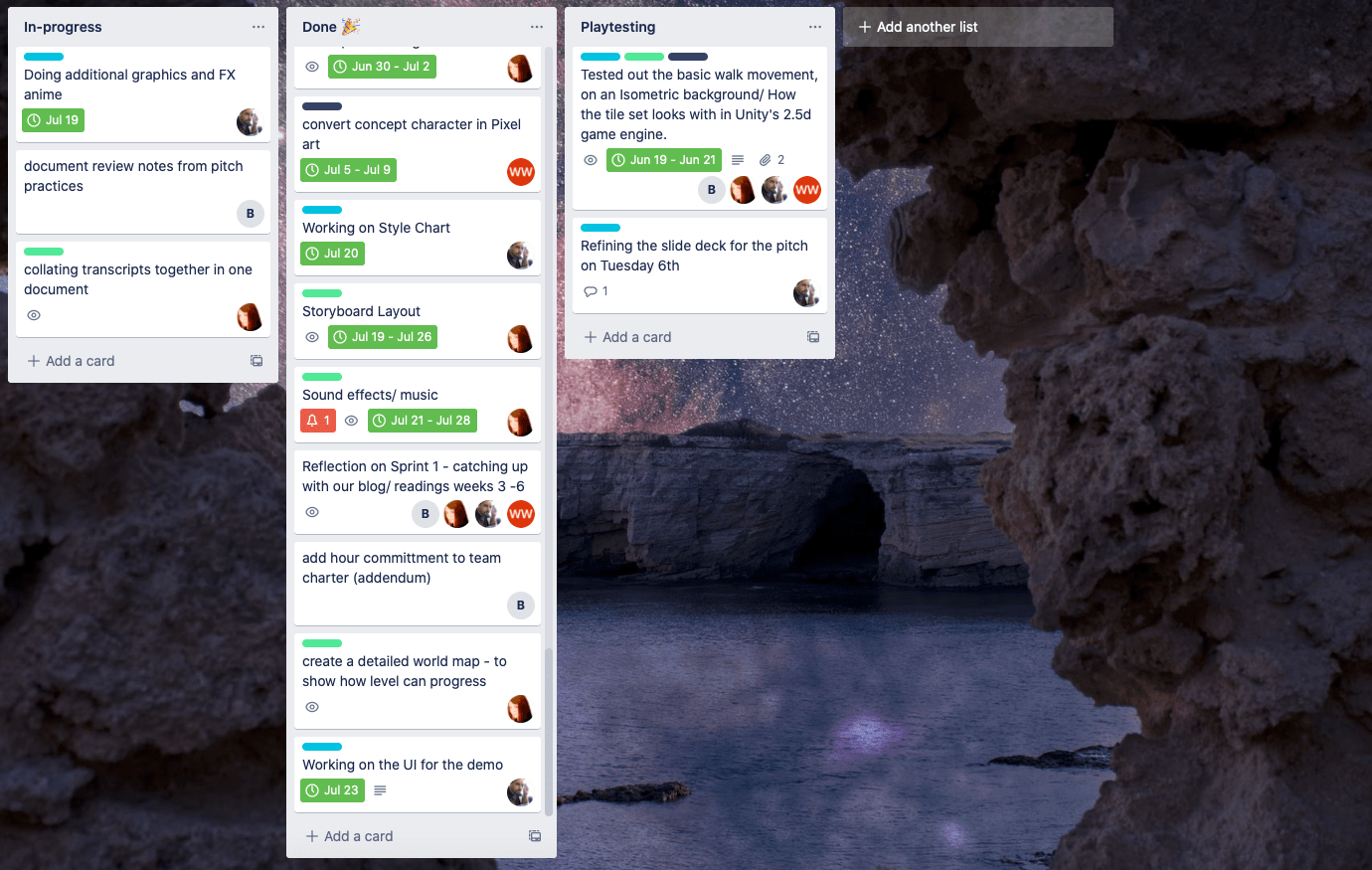
(Figure 1 : Norton, Ward, Lakin and Land 2021 The Wild Branch Kanban Board)

You can see what I am currently working on… One of the most interesting pieces of artwork I have done yet.!!

The

World

Map

I started off by re looking at my first basic isometric map, that I created in the beginning. Just to jog your memory…please see the image below…
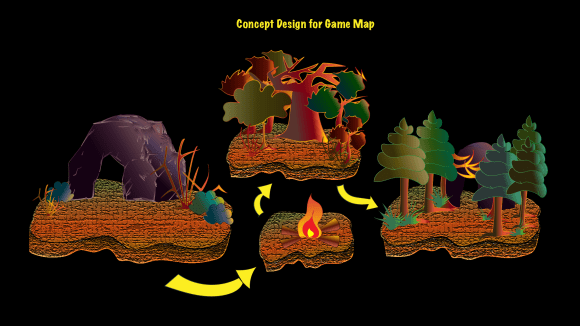
(Figure 2 : Norton 2021 Original Concept Design for Game Map)

My initial inspiration was from some isometric maps I had been researching before hand, as a way of allowing the player to understand where they start in the game’s first level for; Keep It Burning, and what the end goal was, ie. finding another cave dwelling… bigger, more equipped, and more protected from predators.

However as I progressed with my concept art, after the practice pitch, one piece of my art work had been completely forgotten about, and I realised I wanted to focus more on the map I originally made with the style in mind as Bear & Breakfast, as per below.

(Figure 3 : Gummy Cat 2021 Progress Map: Bear & Breakfast)

Problem

Because I loved everything about the Bear & Breakfast Pitch Deck, I was extremely keen to stick with this style for the map, the notion of keeping everything straight forward, knowing exactly where you start, and where you end up, after progressing through the level, was my initial goal.

However my Original Concept Design for the Game Map didn’t get any response from the team at the time, which was not helpful. I knew it didn’t work other wise they would have said something, anyhow I was not sure why? I was under the impression that I needed to draw up a simple layout map, to show as part of our, ten minute video coming up. Everything was on layers, in Illustrator, so each layer was easy to remove at any time, if it didn’t work, if that was the case!?

Solution

After speaking to the others about the map, more recently, I proposed my idea, to say this is the map style I am looking at now, as the map is important, to show our progression, and this is the art work that caught my eye.

This is what I used as my world map inspiration layout, as it clearly shows 4 areas, and some hidden by cloud. I was sure that everyone would be keen on the layout, as it fit more perfectly with our in game pixel art style too. I assume this was the reason that I didn’t receive feedback, due to me personally not doing pixel art, even though we said at the beginning of the project that we would mix textures.!? Luckily I was right, and they all was keen for me to experiment with the style…
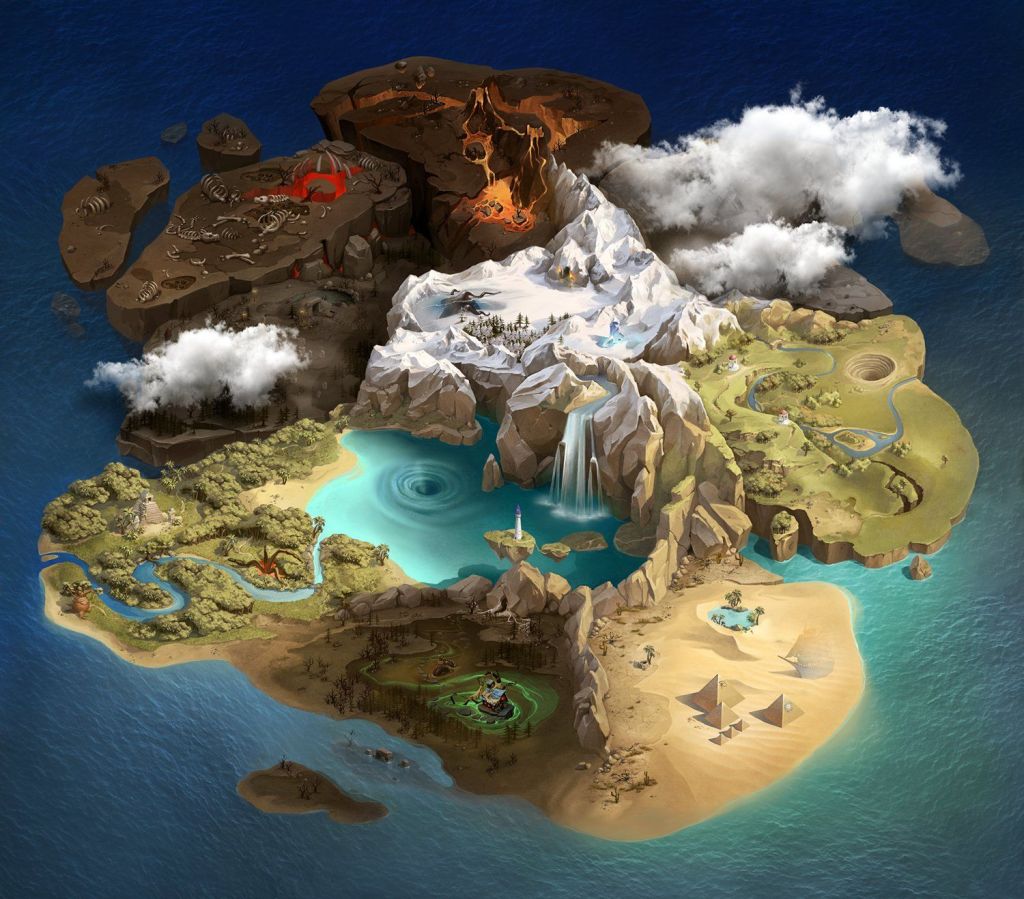
(Figure 4 : Kashkina 2021 Location of land)

As you can see the amount of detail that has gone into Kaskina’s Location of Land is amazing. All I want to do in my version, is focus on creating at least 4 , domain’s, one as the starting area, next, where you progress too, and a couple locked locations hidden by the cloud, finished with a little detail.

Below is a gallery so you can see my progress.

Week 10.3 – 4th August. 2021

Reflecting

During the week, I have started to feel that we really are picking up the speed, but I think this is because everyone realises, that we only have a couple weeks to go and ideally it would be productive now, for each team member to focus on catching up with their blogs. In regards to time pressure, the reading; What Do We Know About Time Pressure in Software Development?, by Kuutila, Mantyla, Farooq, & Claes.

On the positive side, time pressure can force a development team to focus on the paramount features of a product. On the negative side, time pressure can induce tunnel vision where making the next deadline is prioritized over product quality and worker well-being.

(Kuutila, Mantyla, Farooq, & Claes. 2020)
.

According to; Kuutila, Mantyla, Farooq, & Claes, software development has usually got a fair amount of time pressure and deadlines involved, which can lead to all different outcomes. I understand it, not always to be a bad thing, as it can almost give you a boost of positivity…

I believe that when you are nearing your end goal, their is an automatic switch inside that says go..go..go.., even if you have been giving your all throughout the project, you just want to push your self a tiny bit more, (not that you actually do though). Then when it is the time to view the prototype, and check out the finished artefact… it feels so rewarding.

Its almost like reaching the crescendo just before the end of a song, I start to feel relaxed once I have reached that final big note…then sad and pleased at the same time, because although the song has finished, you can begin the same process again, another time.

References

DeMarco, T. and Lister, T., 2013. Peopleware: productive projects and teams. Addison-Wesley.

Kaskina, E. 2021. Location of Land. Available at : https://www.pinterest.co.uk/pin/161003755405283700/ [Accessed 03/08/21]

Herring, P. 2020. Phoebe Herring on Freelance. Available at : https://flex.falmouth.ac.uk/courses/913/pages/week-10-phoebe-herring-on-freelance?module_item_id=54820 [Accessed 31/07/21]

New, W. 2020. My experience creating a startup at Launchpad. Available at : https://flex.falmouth.ac.uk/courses/913/pages/week-10-alumni-video-warwick-new?module_item_id=54821 [Accessed 31/07/21]

Kuutila, M., Mantyla, M., Farooq, U., & Claes, M. 2020. What Do We Know About Time Pressure in Software Development? IEEE Software.

Full list of Figures

Figure 1 : Norton, Ward, Lakin and Land 2021 The Wild Branch Kanban Board

Figure 2 : Norton 2021 Original Concept Design for Game Map

Figure 3 : Gummy Cat 2021 Progress Map: Bear & Breakfast

Figure 4 : Kashkina 2021 Location of land: on Art Station

Categories
GDD730 - Module 2

Norming – Group Development…

Week 5.1 – 25th June. 2021

Building Trust in Virtual Project Teams

I started this week with an academic article; Building and Nurturing Trust Among Members in Virtual Project Teams, by Lukić and Vračar

They discuss the advantages of working remotely, and in virtual project teams, how productive it is, what skills you learn, the way to build trust in virtual project teams, and suggest methods and activities that can help strengthen trust in remote teams.

“One of the major trends widely adopted by

numerous businesses worldwide is the establishment of virtual project teams, which allows members to work

from remote locations regardless of their time zone, nation or culture and to collaborate using various information systems and technologies.”

(Lukić and Vračar 2018)

I found this reading to fit perfectly with the Co – Creative Design & Development Practice module we are currently in, especially for our team!

We have 3 different time zones, 3 different countries, and we all use different systems and technologies to one another, with totally different personalities.

Lukić and Vračar, discuss methods and activities such as;

  • New approaches to recruiting an effective team leader.
  • Establishing behaviour.
  • Creating a reward system for performance.
  • Maintaining a positive organisation.
  • Having regular and reliable communication, such as; virtual team meetings, and occasional face-to-face meetings.
  • Organising team-building activities.

Implementing new activities – to help with Team Development

Since the new team leader has taken over the role, I feel the above methods and activities, are already in place, however the last point mentioned, is really the only thing we need to put into action, to build more trust throughout our team.

But right now since we are working towards the practice pitch and checking all the art work is correct, that it has been converted to pixel art, the basic mechanics are working for one of the main characters, the name of the game is confirmed, with documents in play, such as Trello, Google Drive, Miro, and we are working on our communication, through the use of Discord, I think we are in a very strong position, trust is building, very slowly…but surely which is helping the team to create a strong bond, roots are taking place.

Distributed Scrum – Part 1

In Alcwyn Parker’s video, he reveals where and how issues can arise with communication – most of the time, meetings are where the problems start, not from what was said, but the tone it was said in.

“Each team member should take ownership of their own decision’s made whilst in a meeting”

(Parker 2020)

I feel this is an area we struggle with, although we are working on making ourselves clear, it seems we need to work harder with our communication, especially in webinar meetings. One thing I shall put into action is;

  • To research some of the other avenues the guys are working on, so I can gain a better understanding of the technical terminology. Which will be one less conversation we need to worry about, and focus on the actual game development.

Distributed Scrum – Part 2

Since the second video discusses the use of the Trello Board, for organisation with the simple Kanban board, I thought I would show ours, and what the team is individually working on, has completed and needs to do.

(Figure : 1 Trello 2021 Kanban Organisation board)

Scrum Strategy

Each team member in a scrum meeting, should have access to the team content, and should be able to ask the question;

  • What did I do yesterday?
  • What am I going to do today?
  • Do I have any blockers?

According to the scrum strategy, the scrum master should be in all meetings, to make sure that the direct line of communication is not broken.

(Parker 2020)

Method – Alternative meetings;

  • To make the webinars at different times of the week, where all the team can be present, rather than put all the weight on the scrum masters shoulders, and for him to attend every meeting, for all different time zones and report to the others.
  • I think its a much more friendly approach to do what we are currently doing, meet every wednesday at 12pm which suits everyone, and every Monday at 6pm with our supervisor. Plus in between we communicate more throughout the week, on the Discord channel, and always try and comment on each others work, just so we know we are all on the same level, and there is no miscommunication.

Week 5.2 – 29th June. 2021

Design Style Guides

A document that sets out the clear guidelines of a brands visual identity, and is to be upheld by all team members, can be short or long, but allows each team member to be working on their own thing, whilst keeping on track with the brand of the company.

Why create a style guide?

The points below are just some of the reasons, why all company’s should have this put in practice as they are;

  • Quick to set up.
  • Good for client communication.
  • Creates consistency within the team.
  • Helps simplify the collaboration process.
  • Helps the new team members to understand the brand.
  • Makes all communication look professional.

In keeping with the style guide content, this is what I created for the “Isometric Style Guide” in the beginning, however it wasn’t used because the tiles were created in Adobe Illustrator, and my peer wanted to convert them into pixel art, using a different application.

Mixed signals?

I wasn’t keen on this idea, as the only one thing I really wanted to add to this game, was a textured environment, which is why I spent a good couple of hours working on the tiles, to make them look as real as possible.

More importantly, the outcome was not so straight forward, and the only lesson, that I have gained from this part of the team journey is;

  • To make sure you know who is doing what from the start, I suppose it all comes down to making sure you have a good clear design style guide from the beginning of the teams journey.

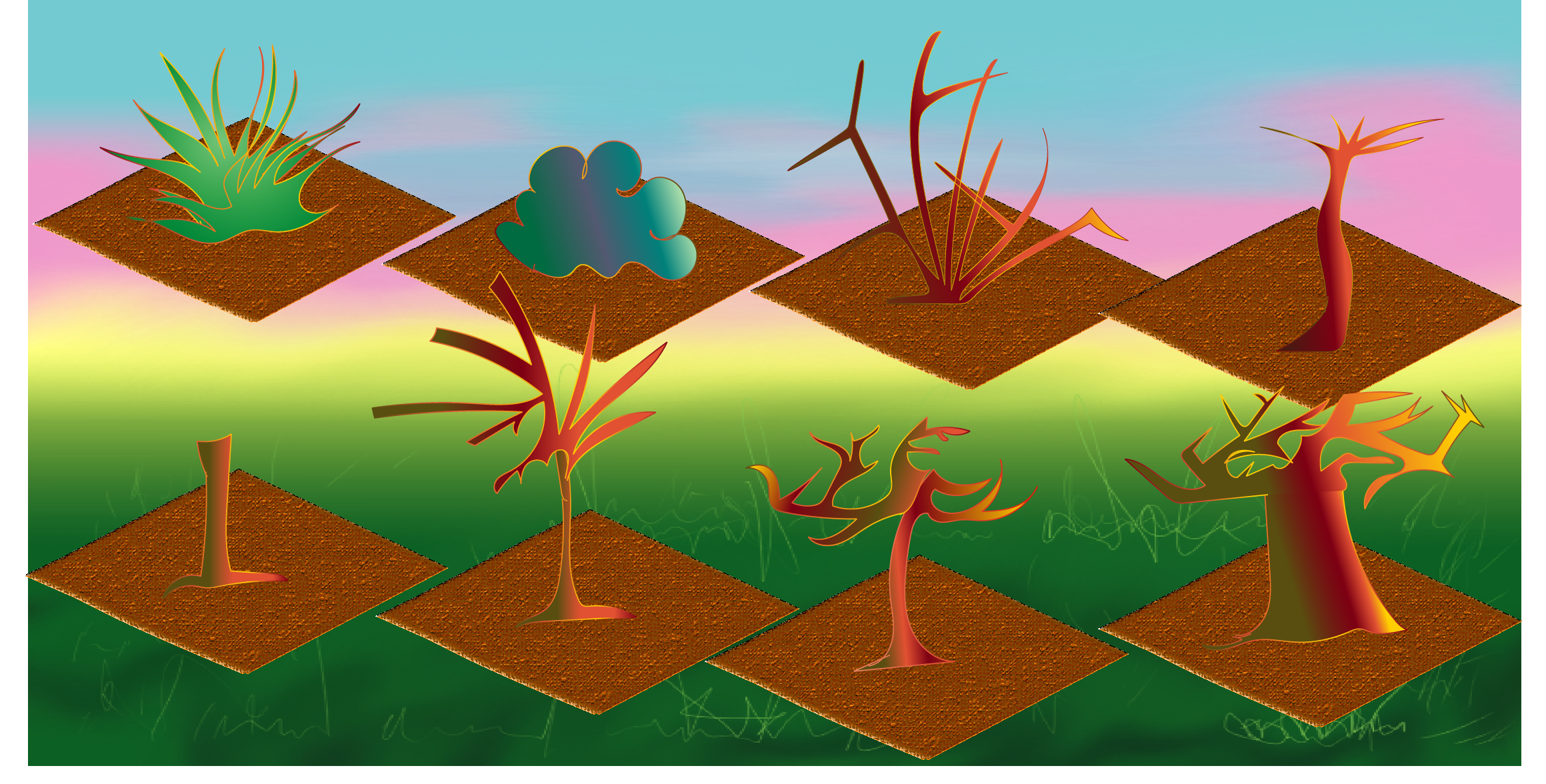
These are my Isometric tiles, I thoroughly enjoyed this process, especially as it was another first for me.

How they were incorporated?

The GIF below, shows my textured grass tile – sets, from when they were placed into Unity, using the Isometric 2.5D grid.

Issue – Grass Tile – sets

I was so excited when I got to view the Gif for the very first time, seeing my tiles in action, it felt so good to be part of this project!

However, I realised they were rather big when I saw them in this GIF, they didn’t join up perfectly, although I could have amended these, and made them smaller.

But we had a problem, due to me using Adobe Illustrator, to get a real natural grass/ and ground effect, my peer was using Piskel, a pixel drawing application, when I sent my art work over to him to convert, we found the sizes to be a complete mis-match.

(Figure 3 : Larkin and Norton 2021 – Grass Tile-set in Unity 2.5D)

Resolving the issue

We decided to avoid this mis- match from happening again, we started to make more time for each other, a time that fit us both to clarify each week what needed to be worked on, what was being worked on, and had been completed.

Although this is exactly how the Kanban Trello board is played out, and I do check it once a week to see what everyone is working on, and I have been updating for the guys, as I had agreed when we were distributing the documents, however I think we all as individuals need to update it at least once a week ourselves, so that we are all on the same page.

Style Guide below for; The Wild Branch

(Figure 4 : Land 2021 – Style Guide – for Logo)

Week 5.3 – 30th June. 2021

Charting The Course: The Effects of Team Charters

McDowell, Herdman and Aaron’s academic study is focused on finding ways to improve team performance. Their research looks closely at how, ‘Team Charters‘, help with improved process outcomes, including a list of characteristics such as; communication, effort, support and the over all bond between the team.

Communication within a team is an important facet of the team’s overall teamwork quality. Frequent, informal and direct communication among team members is important to team functioning and performance

(Hoegl & Gemuenden, 2001).

(McDowell, Herdman, and Aaron. 2011)

Improved Development

McDowell, Herdman and Aaron discovered that teams who were introduced to the team charter from the beginning, increased their level of key characteristics, that are important, for the creation of teamwork quality.

They encourage managers and organisations, that rely on teams to be aware of the benefits of building an effective team charter in the team formation process.

What the outcome is for our Team?

I have found the team charter to be a great way, for each member to display;

  • What we each enjoy?
  • Why we took the course?
  • What our aims/ goals are for the end of the masters ?
  • What skills we each want to develop?
  • What skills we already have and what level of proficiency?

So far, I have been researching mission statements, to start the team charter, and I created a couple, but the one below is what I suggested on Discord, and the team all agreed with me.

Mission statement

The Wild Branch is committed to making games that can grow with the ever changing audiences of today, through humorous puzzle adventures.

(Norton 2021)

When looking at other mission statements, I found them to be completely unique and individual to the company or organisation.

I tried to think from a different perspective, as though we were a professional mini game company starting up, and what we would like our new potential customers to know about our style, and the audience that our games are directed to.

References

LUKIĆ, J. M. and VRAČAR, M. M. 2018. Building and nurturing trust among members in virtual project teams. Strategic Management-International Journal of Strategic Management and Decision Support Systems in Strategic Management, 23(3).

MCDOWELL, W., HERDMAN, A. and AARON, J. 2011. Charting the course: the effects of team charters on emergent behavioral norms’. Organization Development Journal, 29(1), p.79.

PARKER, A. 2020. Design Style Guides. Available at : https://flex.falmouth.ac.uk/courses/913/pages/week-5-design-style-guides?module_item_id=53071 [Accessed 28/06/21]

PARKER, A. 2020. Distributed Teams Part 1. Available at : https://flex.falmouth.ac.uk/courses/913/pages/week-5-distributed-scrum?module_item_id=53070 [Accessed 25/06/21]

PARKER, A. 2020. Distributed Teams Part 2. Available at : https://flex.falmouth.ac.uk/courses/913/pages/week-5-distributed-scrum?module_item_id=53070 [Accessed 25/06/21]

Full List of Figures

Figure : 1 Trello 2021 Kanban Organisation board The Wild Branch Team

Figure 2 : Norton 2021 Isometric Tree tile-set – created in Adobe Illustrator

Figure 3 : Larkin and Norton 2021 – GIF – Grass Tile-set in Unity 2.5D

Figure 4 : Land 2021 – Style Guide – for Logo