Week 8.1 – 18th March. 2021
Rapid Ideation session 2 continued…
This week I want to continue our rapid ideation project Tincan – Out in the Ocean, focusing on researching different ways to animate the seaweed, and other objects that are in our game.
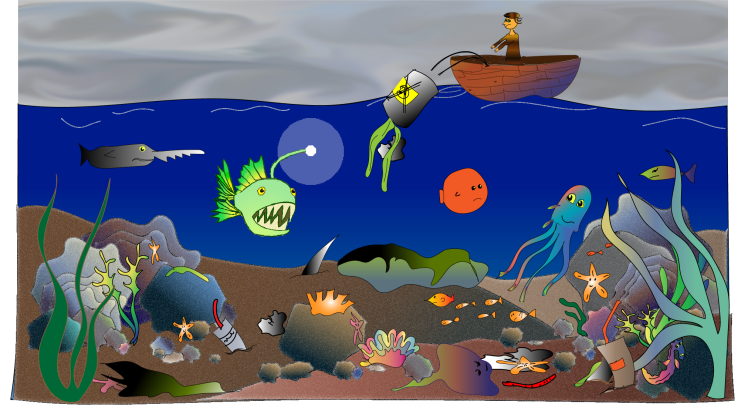
How the seaweed looks currently
User and Audience response
Past Experience
This week, is one that I do have experience in, especially when talking about the audiences response. My degree was in Theatre and Performance, and one of the areas we focused on would be breaking the forth wall, to allow your audience in, to understand the feeling and emotion that was being portrayed, was key to keeping them engaged.
Especially, if we were due to do some undercover, Political Theatre, where the audience, (the public), would not be aware they were getting involved. You would have to tread carefully, by making a scene seem real, but paying attention to those that had started to get involved, that their reactions did not become too aggressive, panicked, upset or anything to the extreme.
After watching the user and audience research Introduction video, by Erik Geelhoe, I now have a clearer idea about how to conduct research, and what qualitative methods are, and how to put them into practice for our rapid ideation session two.
Erik demonstrates how to do the following correctly;
- Individual Interviewing
- Cognitive walk through/ thinking aloud – to sit down with the participant/with your app, and ask them to think aloud, you want to know what they think of the app, how easy it is to use, what they think will happen when they are about to press a certain button, and anything else.
- Group Interview
- Focus Group
- Asking participants to keep a diary
- Observations
- Describing what, (and why) participants do something
- Self reflections, (by you) the researcher
My Observation
My first approach to observation was for a theatre piece one time. You were asked to observe people more closely, and almost mimic there movements exactly. I had this one experience when observing at the train station, it was very weird, and I followed the timing and copied exactly what this passenger was doing whilst sat waiting for the train.
In doing so, It almost felt like we were one…the process happened for quite a while…
Obviously, when he went to look at me, I looked that way to, so he wasn’t yet conscious that I was mimicking him. This wasn’t harming anyone, or upsetting that passenger at all, which is what we were advised, stop immediately, if you think the observation is offending or making anyone feel uncomfortable. These were strict rules, which actually links to the next part of the blog below, about ethical implications.
Considering the ethical implications of your research.
Firstly, I start by saying that our research activity would be low risk…
We have discussed our view of directing the game Tincan – Out in the Ocean, towards the 7/8 year olds, at the youngest, as some of the facts that pop up, may be upsetting for little ones.
We have focused on the development of our artefact, to be a learning /fact finding mission.
In this case no one will get hurt, the game is only playable on Windows and iMac so far, but if it was to be made into an app, then obviously we would have to go down the path of making sure that the age was highlighted for the recommendation, and that it was noted also during the game play facts will pop up which may upset/ disturb the player. That does mean it could only be downloaded by an adult, as they would have to enter the password for their account.
With reference to the above research of our artefact, to make it clear, this was intended to help Patricio and I practice our skills and put them to the test for the two weeks, working on the area that we each would like to use and for our personal development artefacts in the final term.
Different Scenario
However if we was to look at this from another point of view, and maybe set a different scenario, where this was a adult game, with an 18 years of age recommendation on the cover, one of the first things to do, would be to research more into, plat-former games, obviously if using facts, make sure they are true and have come from a reliable source.
We would need to look closer at our findings, and see if this game would be enjoyable, exciting and even moving with the environmental fact content, would there be a market for this kind of game, or would it be better, if we used this to just raise awareness of how bad the pollution is in certain oceans compared to others.
Also it would be important to get together with a focus group, for protecting the ocean and even a second focus group for gamers who like the 18 years of age, plat-former games, paying close attention to pollution, and recycling. Would they be interested in this kind of content?
I doubt this very much, and I do think its ideal for the younger ones who are still learning about the environment and how to care for it.
Medium Risk
Looking at this scenario from a researchers angle, It would still be a Low risk project, unless the content was changed, with Tincan, being redesigned to look really life like, and it had tendency to become more aggressive, and blood was spilled in a very violent way.
Basically if the whole game layout was changed, thats when we have to;
- Identify any risks
- Carry out an Ethics review
- Complete an Initial ‘checklist‘ to confirm the the level of risk
- Submit a full ‘Application for Ethics Approval’ to find out what it has been identified as Medium or High.
Week 8.2 – 19th March. 2021
Initial Intention
This is my chance to get some practice with different animation techniques. I have chose to search for seaweed animations, which have been created in animate cc, to look at some ocean movie scenes which shows the natural movement that happens under the sea, and to pay closer attention to the timing.
Plus I am also looking into documentaries about the Ocean and its sea creatures, to get a better understanding of other things that move very slightly, but still will help to keep the game more natural.
The game feel is very important, as this is not meant to be just a fish in the sea, searching for food, and finding a lot more rubbish, but to help you understand how the main character Tincan is feeling, and everything that is happening around him in real time.
One of the first animations I obviously checked out was “Finding Nemo”.
Here below shows a snippet of the seaweed movement in the animation.
Overview
From watching this part of the animation, you cannot only see all the other sea creatures movements and get a better understanding of the timing, but also I can compare the fish tank/ aquarium plants movements and timings, to the ones that are in the animated ocean.
Next step
‘Finding Nemo‘ is from someone else’s research, so next I will be looking at an ocean documentary, filmed live, which captures the real action thats happening at the bottom of the sea, and observe closely.
As we have a set time for this rapid ideation session 2, to make our game interactive, the next point of focus, is making brief notes of how the seaweed sways, what kind of direction, and the different kind of sea plants.
(Catch. 2018.)
Research
Catch is a documentary that reveals the species of sea creatures not found anywhere else, one of which is the Port Jackson Shark, which pumps sufficient water through their gills, whilst lying at the very bottom on the sea bed, waiting for its mate. When it gulps a large mouthful of sand, it is filtered through its gills also.
Most species of sharks have to keep swimming, to maintain the flow of water, to go over its gills to be able to breath, but they don’t.
This next creature however is very unusual. It movements and appearance, is just like a blade of sea grass. The Pike fish blends in with the sea grasses perfectly, when it moves, it can dart away very quickly!
This is a very simple shape, and one that I could add into animating, with my seaweed.?
One other that caught my attention in particular is the Pigmy Leatherjacket, this is the exact colour as the bright green sea leaf.
Now we travel from the coast of Southern Australia, to Egypt and the Red Sea.
(Real World. 2020.)
Bright colourful corals are packed beneath the Red Sea, and yet again it has some unique species that could be added into our game. This documentary purely focuses on the different kinds of fish, and some of the deadliest corals.
In comparison to the first one in my opinion, you have a better view of the sea bed, and movements that happen very rarely, but when they do, I noticed that bubbles pop up, very slowly.
Comparison to real life experience
I have been lucky enough to snorkel in the Indian Ocean, when staying in the Maldives. However the experience under the sea, was more amazing in the evening, then in the day time.
My partner and I got to see first hand what was happening to the coral, because of tourists over the years constantly touching it, a lot was dead, or dying. Don’t get me wrong we got to see some of the most scariest sea creatures, such as the Trigger Fish and the Moray Eel, and for me it was my first experience of snorkelling, so very excited and nervous at what we might find.
If we had more time this is something we could incorporate into the game, the feeling of what it is like to be under the ocean, swimming beside some of the most unusual, striking fish.
Here are some photos, which should also help with our ocean research for our game.


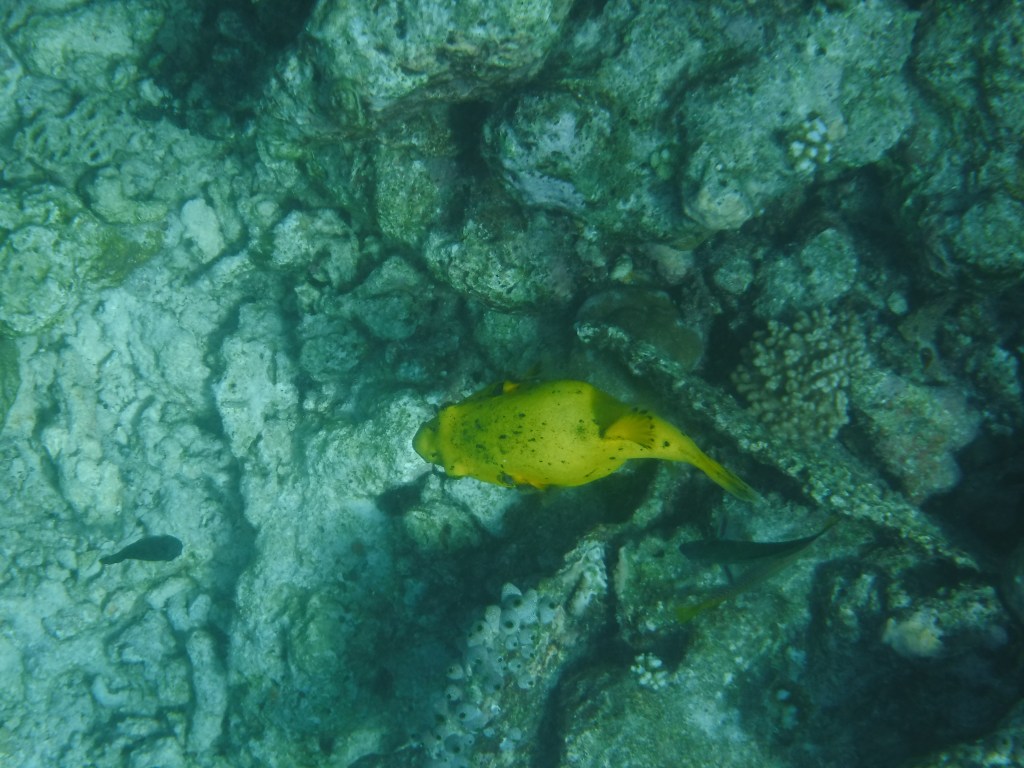
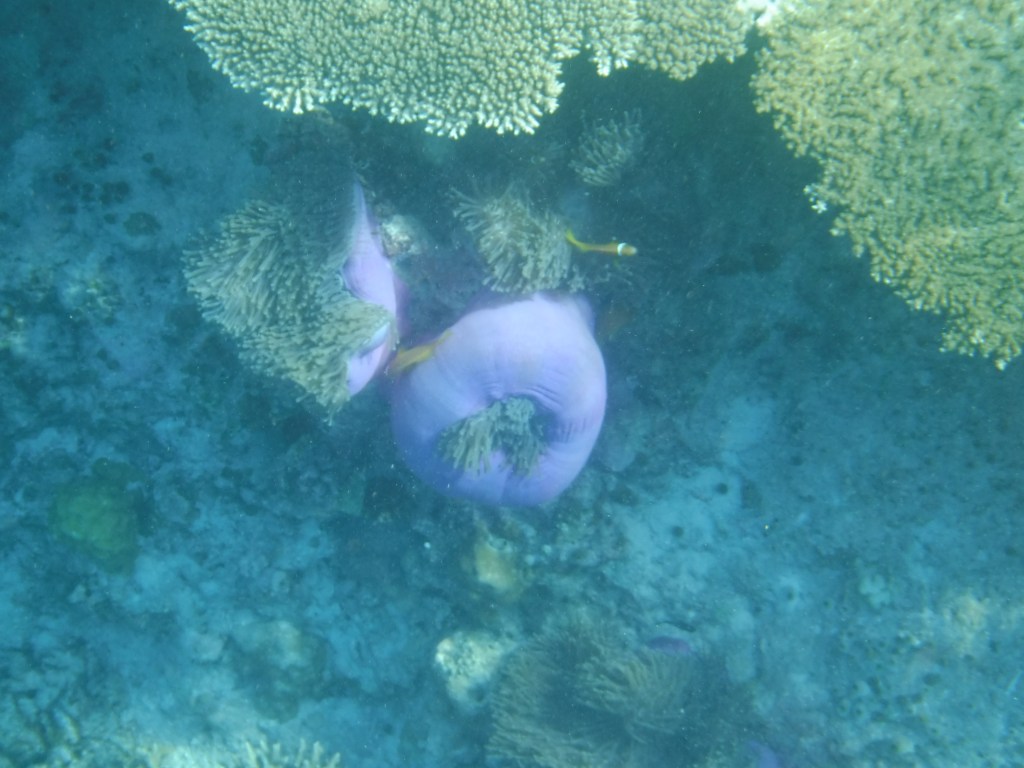
(Figure 2: Norton 2015 Maldives fish/ Anemone)
Week 8.3 – 20th March. 2021
I have began experimenting with Adobe animate CC, which I have been wanting to do for ages, and with my seaweed goal in place, this seems to be the perfect opportunity, to follow a beginners tutorial, this is what I followed below.
From this I learnt a few of the essentials.
Below is what I put into practice straight away, I have been so enthusiastic about this for such a long time, that I have been hesitating about starting to use this application.
Here is my second attempt on my sea weed shape. I only drew out a very rough drawing to see how I could transform these simple lines with adding movement to it.
Process
The first part of this tutorial was how to draw using this programme, what the brushes are like and how to add shadows with drawing behind and so on with many other buttons.
The second part demonstrated how to work on a layer, and add the asset warp tool to the shape, following some key frames and a classic tween, and because it was working with 24 frames per second, (the video was how to create a flickering flame) my sea weed looks like its taking off, trying to leave the ground. However this may look, I am so pleased…because it moved!!!
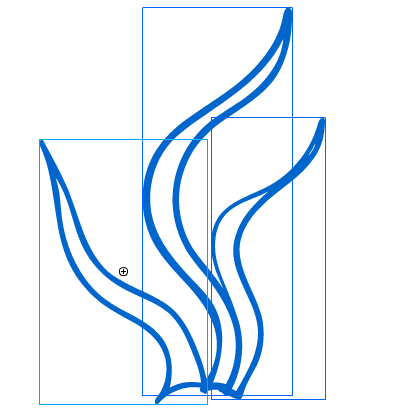
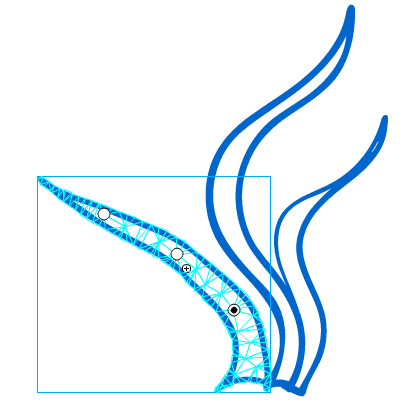


(Figure 3: Norton 2021 Seaweed Animate cc first attempt)
As you can see from the below, each piece of sea weed, looks like its having a good conversation with the other one. At least I have movement, now to focus on not moving the bottom part, and moving the seaweed more as one.

I will quickly mention, that I did find this video after wards, which shows the basics of creating a wave arc.
Seaweed Development
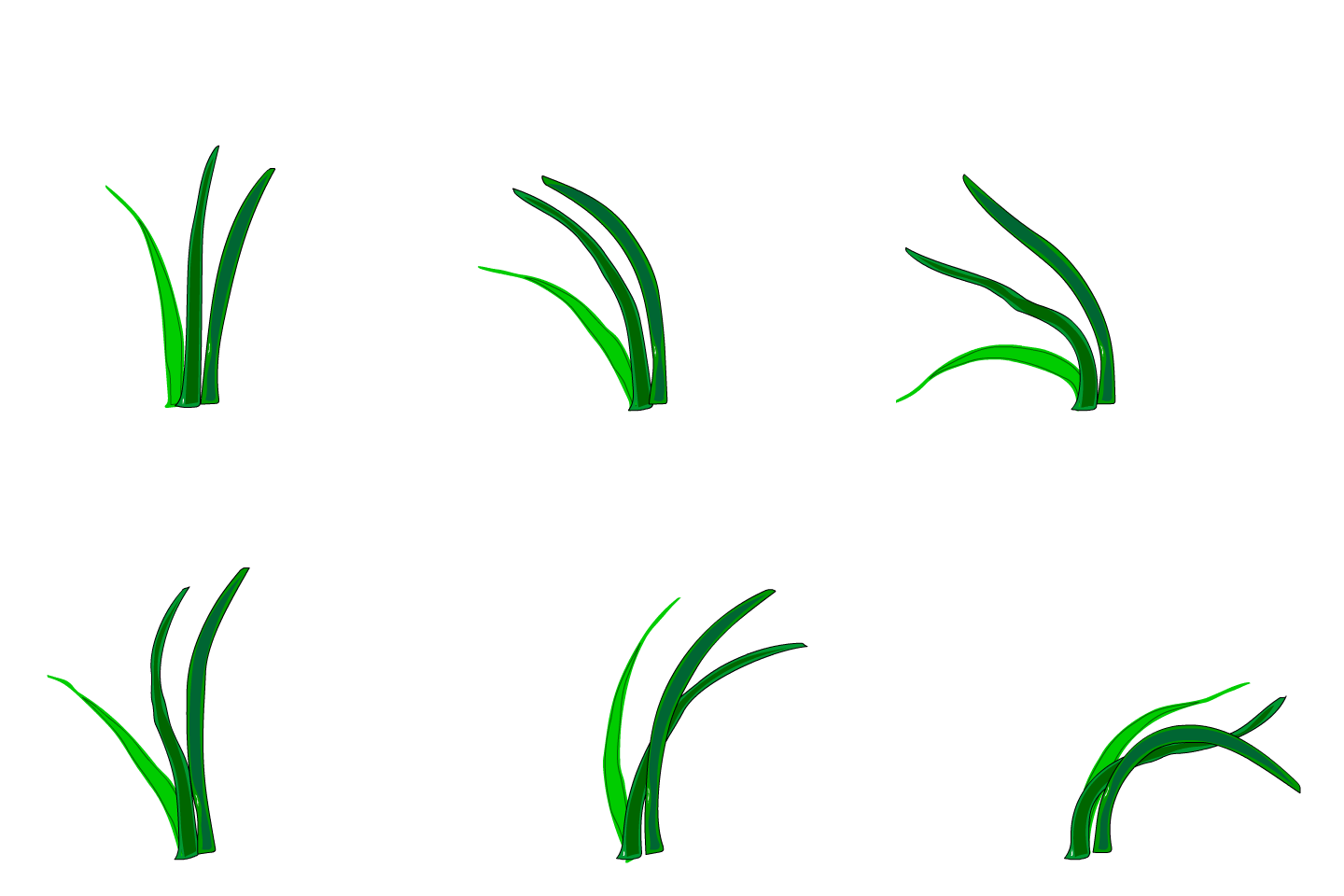
After reading, and following the method on Richard Williams, ‘The Animators Survival Kit’, I put into practice the approach of placing each piece of sea weed on alternate timing patterns, and incorporating the shapes outlined from the above video.
This was the result below, finally I was so pleased, as using Animate cc, started to become clearer, and these principles really worked, more to point we could use it in the game! I shall be reading this book a lot more, it was such an improvement from my original ‘conversational seaweed‘.
I was so determined to animate something for our game, and through the whole process I have began to speed up with all the apps I have been using, such as Photoshop, Animate, Trello, and even learning a little about creating a Repository.
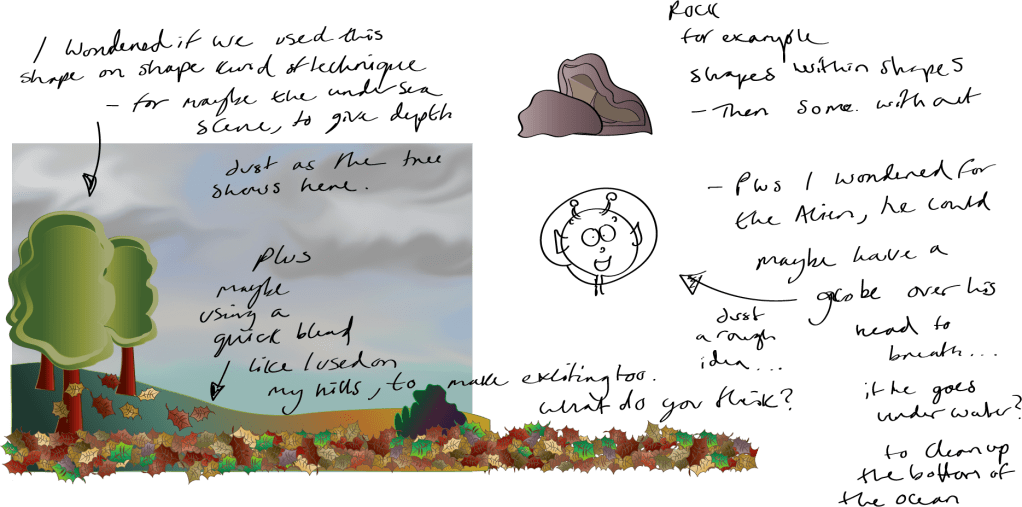
Here is all the areas, we have been focusing on together, constantly collaborating, staying touch to share our ideation techniques, and work on what could be improved, and things that maybe wasn’t quite working.

Demo of Game – Tincan
Below is the Video of the first demo for Tincan Out in the Ocean.
Video – current gameplay – Left and Right swimming no eating.
Week 8.4 – 23rd March. 2021
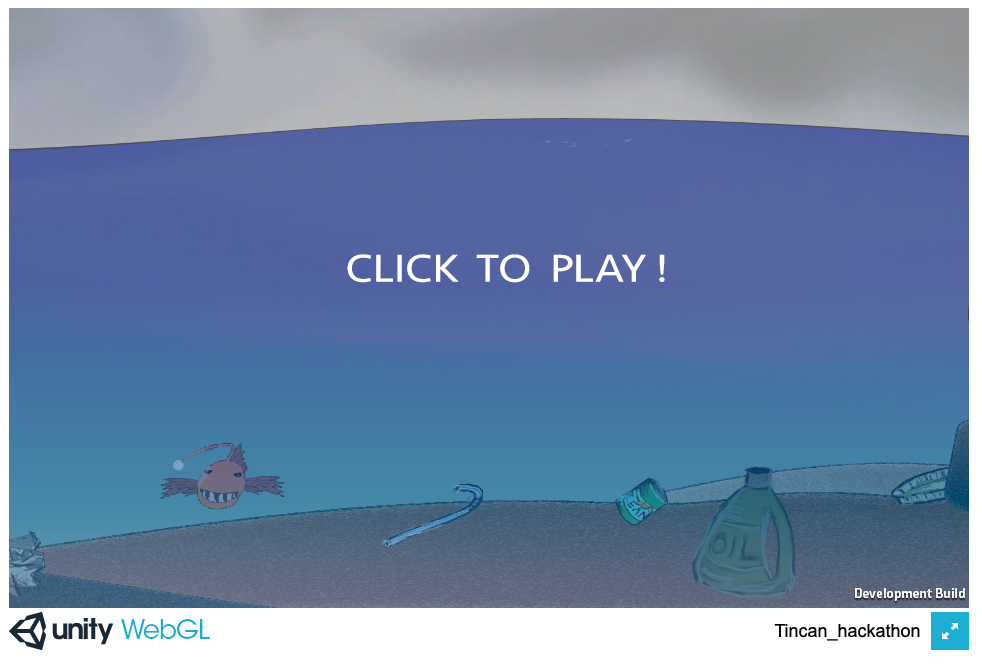
Below is the game demo for Tincan Out in the Ocean, to show the final outcome, of our environmental artefact we have created. (This may open in another window.)
Evaluation
When Patricio and I decided to work to together to create a new artefact, that was intended from the start to be a game. I think we both assumed as he had a character of a fish as an animatic already, that the process would be long, but not too difficult.
Therefore, after the initial set up of deciding what I would start working on straight away, whilst he was testing Unity (which the game would be created in), alongside GitHub to check that the assets used was stored in the correct place, and the files wouldn’t get corrupted.
I went ahead to set up a Trello board for us, so we had something to follow, and knew what had to be done, what we were working on, and what had been completed.
This was a big support with helping us to organise ourselves, and know what each other was doing. It made you feel a little more at ease, due to being able to design the background of the Trello board, to suit the project you are currently working on.
Process
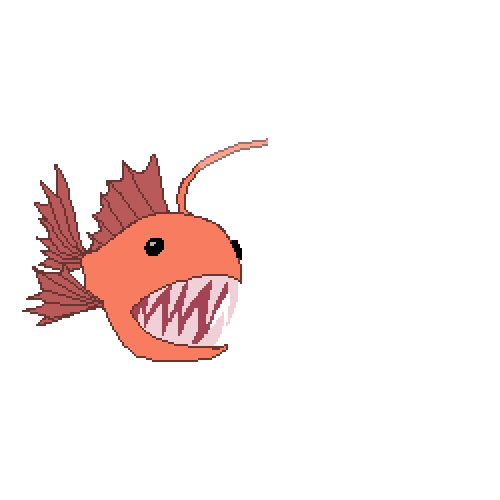
Patricio had collaborated with me about the fish he had already created, and his notion of a creature in the sea fighting human contamination, the moment he said this, my image was an alien, that would have a globe over his head, and had been sent down to earth, specifically to go into the sea and go to the bottom, and collect as much trash as possible from the seabed, which would lead to more points for certain items, and less points for others, that way we would be showing that the ocean needs some attention, making younger ones aware of the pollution in the sea, and because the main character was an alien…obviously the alien could be designed however, and wouldn’t upset anyone, as it wasn’t based on anyone.
But this is not what happened, the first priority was to get a background created.
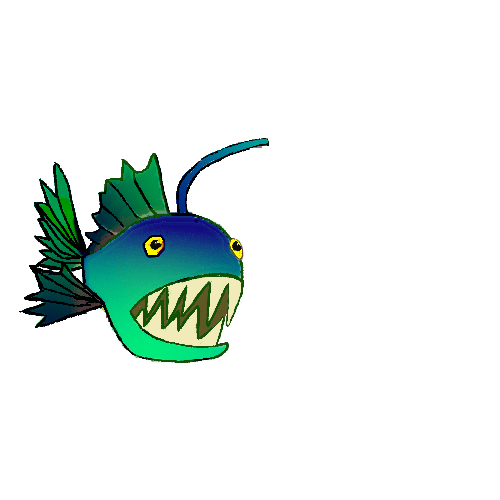
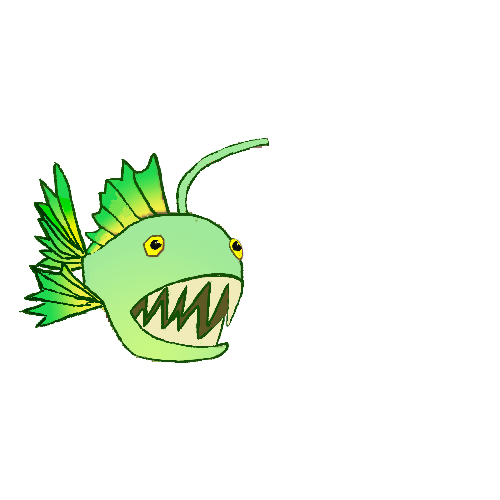
I got to work paying close attention with crafting a new background, for the creature (Tincan). The layers I worked on was created In Illustrator, which were quite dark, especially the sand hills/ sea bed and rocks beneath, as I wanted to focus on the environment looking sad, dark, and murky, with that game feel in mind. From this starting point we began to look closer at ways to show how ill Tincan was getting, and after I experimented with some different blends, we both agreed that the key colour was sick green, and literally he just needed to turn back to normal, which would be sick green to orange.
Research to continue
We found more research needed to be done, about how much plastic was actually in the ocean?, what was the outcome for the fish, birds, and people? Whats the worst polluted country’s?
One of our peers suggested this documentary called ‘The Plastic Ocean‘, which is actually what encouraged me to learn more about the different and unusual sea creatures, that are rare, and at this stage, may not be around that long.
This really helped us to focus on the key item of food for our main character Tincan, that being the Shrimp, as this was already suggested during out ideation stage, but discovering that this little fish when collecting plankton, which in many cases is actually micro plastics, (all kinds of plastics over time that has been ground down to tiny, winy particles), is actually the start of the food chain in the sea, and every slightly larger fish, that eats each other, would be getting this in its blood stream.
So I would next be focusing on creating some good sized rubbish pieces, and a good sized shrimp as the main food source for Tincan. Whilst Patricio, was coding Tincan ready for the first show and reveal week 7, with an aim for Tincan to move left and right, to move through the trash and between the rocks, seaweed, that we had so far added to the game, plus with a basic score counter, that he had been working on, with a focus on showing his health improving or deteriorating.
After this initial presentation, we could see what we wanted to improve for the second week, we knew what could be achieved, and one of my goals which I was very nervous about was creating some animated seaweed.
I set to work with creating more key trash items that I remembered I had seen in the documentary, and also I started working on the audio sound effects, which I had a lot of fun with, as each time I would record my self making blob noises, or munch sounds, ready to apply to our game. I hear the birds in the background, which we found very funny, I had to record them again, so it would sound more professional.
I suggested a ogg file on the website, sound image.org which Patricio recommended me for when I wanted sound for my first rapid ideation project. The piece I found for Tincan though, we both thought was perfect. But the next thing for me to do and complete….was animating some seaweed.!
Animating seaweed for the first time
Now to start this process was quite straight forward, I was extremely keen to start using Animate cc. As I had been putting into practice a few other sessions, of learning about the buttons, the screen, where the assets are kept, etc. However, when researching online I was sure I remembered seeing the word arc, and I kept searching for this, and each time of asking “how to create an arc for seaweed in animate cc” I was just getting random answers, thats why the first animate tutorial that you can view above is not relevant, as it focuses on a flicker flame. I only chose to use it as it said animate cc beginner. Though this is probably the reason why my first seaweed come out so fast, and was not grounded.
From this discovery in animation, it was still worth it in my eyes, as I still got to see the basics, of how she moved the flame, by the asset warp tool, and to understand about working on each layer. Which was a good starting point, but with little advise from Patricio, and a good old giggle, he recommended the next video tutorial for me, for how to create seaweed motion using a wave arc, he advised me to focus only on 3 parts of seaweed, and to keep it simple. That is what I done, and in doing so, created some animated seaweed that could be put into the game, which I was very proud of.
Re – testing the Final Demo – Tincan – Out in the Ocean
We both re – tested the next version of Tincan, you could hear the music, Tincan would eat the trash, his colour would turn green, back to orange, health and deterioration points would show on the score/points counter, and the facts I got from the environmental documentary, would pop up in my a natural looking bubble, and would float to the surface, making who ever was playing aware of what is happening to our oceans.
Very pleased with the out come, we both think its something we would like to develop even further, and are proud with how much we have achieved within the 2 weeks.
I
References
Barber, J. 2019. Animation Notes – Seaweed Motion (wave arc). Available at : https://www.youtube.com/watch?v=AvmGF8ndDzQ [accessed 22 March 2021]
COHEN, L., MANION, L. and MORRISON, K. (2018) Research Methods in Education (8th edn) London; New York: Routledge.
Catch. 2018. Secrets Of The Australian Ocean (Ocean Fish Documentary). Available at : https://www.youtube.com/watch?v=Z2GTEorghdc [accessed 18 March 2021]
GEELHOE, Erik. 1992. User and Audience Research: An Introduction. Available at : https://flex.falmouth.ac.uk/courses/911/pages/week-8-user-and-audience-research?module_item_id=49194 [accessed 22 March 2021]
Graph Desk, 2020. Adobe Animate CC tutorial for Beginners. Available at : https://www.youtube.com/watch?v=VYZoPkNzFXc [accessed 20 March 2021]
Mangosteen Kids. 2016.Finding Nemo – Video Summary. Available at : https://www.youtube.com/watch?v=OpgWbXthMlQ [accessed 18 March 2021]
PARKER, Alcwyn. 2021. Integrity, Ethics and Policy. Available at : https://flex.falmouth.ac.uk/courses/911/pages/week-8-integrity-ethics-and-policy?module_item_id=49195 [accessed 22 March 2021]
Real Wild. 2020. Red Sea Reefs: The World Beneath The Waves (Wildlife Documentary). Available at : https://www.youtube.com/watch?v=mx1ScqwVu04 [accessed 19 March]
Williams, R. 2001 ‘The Animator’s Survival Kit’ London; Faber and Faber Limited.
Full list of Figures
Figure 1: Norton 2021 Under the Sea Design
Figure 2: Norton 2015 Maldives fish/ Anemone
Figure 3: Norton 2021 Seaweed Animate cc first attempt
Figure 4: Trello 2021 Deb and Pat’s Rapid Ideation Process Continued





 RALPHY GETS ANIMATED..?