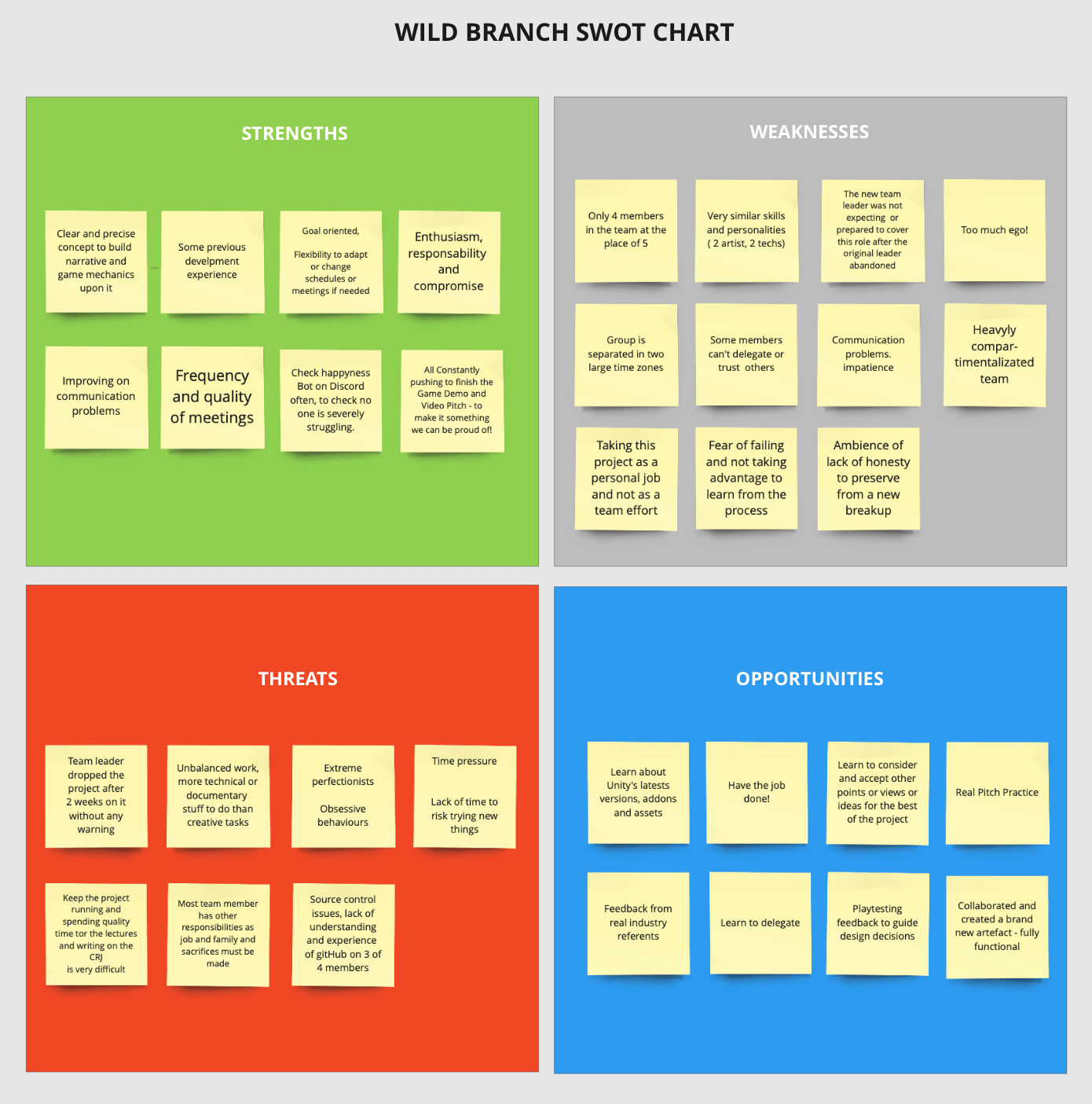
We are asked to create a Swot Chart for this weeks activity, the aim is to analyse, the 4 headings below, and work out a solution as a team to all the problems, threats or weaknesses.
I understand this retrospective to not only be a fun one, but in someway, another bonding exercise, but I fear it may possibly create conflict again?
Hopefully this time though, we are more prepared, and ready for honesty. No one should get offended in anyway, but only realise that we are just trying to solve problems, with a positive outcome.
(Figure 1 : Team 2021 Swot Chart Miro Board)
Factors Affecting High-Performing Teams
Company’s who use teams, find them to be effective, helping to improve productivity, creativity and employee satisfaction.
“Teams bring together complementary skills and experience that exceed those of any individual on the team. This fact enables teams to respond to multifaced challenges like innovation, quality and customer service.”
(Castka, Bamber, Sharp, and Belohoubek 2001)
Castka, Bamber, Sharp, and Belohoubeks ethnography report discovers, that when you develop goals and approaches together, teams often establish stronger communication that can aid towards their problem solving and initiative skills.
HPT – High Performing Teams
Successful HPTs have defined their mission, vision and goals, which are understood by the team members.
“HPTs demand strong group culture, which is based on empowerment, shared vision, creativity, participation, learning ability, trust, and shared consensus.”
(Castka, Bamber, Sharp, and Belohoubek 2001)
Reflecting back on when we were introduced to each other 7 weeks back, I think if we had taken more time to share our goals and visions with each other beforehand, it would have helped to bond us and we may all still be together.
Or if the opposite effect would take place, and we didn’t stay together, it would be because of discovering, that we have similar skills to each other, and we would have realised, we needed more variety in the team to get a better balance of skills and personalities.
This reading now brings me to discuss, Measures of Performance.
“Measures of performance (MoP) are a trigger to improvement and the reason why many improvement programs fail, is the lack of measurement”
(Castka, Bamber, Sharp, and Belohoubek 2001)
Castka, Bamber, Sharp, and Belohoubek, define that by means of a measure of performance, we are specifically talking about the success of the team.
Evaluating Our Team
Looking closely at this study, I have found a link, which I feel directly relates to our team.
‘as a factor affecting successful implementation of HPTs and it was quickly noticed that although the technical skills of the team were very similar, all being skilled engineers, managerial, personal and social skills differed immensely.’
(Castka, Bamber, Sharp, and Belohoubek 2001)
This is what we found when working in our team, there is two that code well, and the other two do art work, but in complete different styles.
However our social skills, are only from what we can see when we chat on webinars, we don’t actually know how each other copes in different scenarios, for example under pressure, change of ideas, loosing a team member etc…
But we are only now starting to really work together, sacrifices must be made, in order to move forward with the team development.
Measuring Team Performance
Metrics – come into play from all aspects of agile development, and help with high performing teams.
How to measure the success of the team
Teams must share what is important to them as a whole
You must not try to measure everything
You should avoid metrics that are; demotivating
Belinda Waldock discusses 2 kinds of metrics – Vanity metrics and Sanity metrics. She advises you to focus on the sanity metrics, due to them being more in-depth, helps the team grow, encourages a positive result, which my interpretation would be…”less talk and more action,” and in this case the “actions” speak louder than words.
Mike Cohn – Advanced Topics in Agile Planning
Mike Cohn of Mountain Goat software, explains how the velocity metric can be used to improve the accuracy of agile planning. He quotes;
“Velocity is the amount of work that a team finishes or plans to finish within a iteration or sprint.”
(Cohn 2021)
I found the two planning scenario’s that could be applied to our team, listed as follows;
A team with no velocity. (A brand new team that does not know each other.)
A team changing size.(A team that seems to loose or gain a member, and the rest of the team needs to adapt.)
Applying the Velocity metric
A brand new team; Cohn states, that for a brand new team, that doesn’t know anything about each other, they should get together, take the backlog item, break it into tasks and divide by the amount of hours.
I believe that a brand new team, needs to get to know each other first, before dealing with backlog items…I think even from Cohn’s point of view, knowing what skills you have in a new team is crucial, but also you should know little more about them, what they enjoy, what they want to learn, and any strengths or weaknesses that aren’t noted.
Week 7.2 – 13th July. 2021
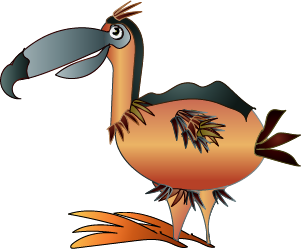
Research – Dodo Concept Drawing’s
During the later part of the week, we had discussed if possible, about adding some critters, or prehistoric animals to the game.
a) To show the characters trying to survive
b) To add more More depth to the game
c) To add a bit of fun to the game, by adding Dodos, and some Jurassic Geese.
The character is collecting goods, click and point as a test.
So far small stones and branches disappear when collected.
No one is keen on the stone slab at the top, as we all agree it takes up to much space.
(Figure 4 : Land, Lakin, Ward, & Norton Concept Art / Pixel / Game Mechanics GIF)
Team Flow Theory
In Van den Hout, Davis, O.C. and Weggeman’s journal of psychology, they discuss flow experiences, their findings show that when the individual is in the ‘flow state’, this is thought to be an enjoyable, rewarding, and engaging experience. From their research they help you to understand the benefits of being in a flow state, how it can aid with creativity, what you produce seems to be somewhat better, and over all better work performance.(Bryce & Haworth, 2002; Csikszentmihalyi & LeFevre, 1989; Fredrickson, 2001; Hektner, Schmidt, & Csikszentmihalyi, 2007; Massimini & Carli, 1988).
Flow is more likely to occur when people perceive a challenge or an opportunity for action that meets (or slightly exceeds) their skill level, which promotes deeper engagement.
(Van den Hout, Davis, O.C. and Weggeman 2018) .
Nine Key Elements
Flow experiences tend to be characterised by nine key elements
Three of them have been identified as essential when entering the flow state.
(1) Clear goals at every stage of the activity;
(2) Clear and quick feedback on the individuals actions and progress
(3) Challenges, or opportunities for action, that needs more skill.
(4) A sense that one has control over the situation and no fear of failure, that is, a sense that one can deal with the situation because one knows how to respond to whatever happens next!?
(5) Intense and focused concentration on the activity at hand, such that all of one’s thoughts, effort, and attention are directed at the current task, and distractions are totally excluded from consciousness
(6) A merging of action and awareness, meaning that one’s involvement in an activity is so intense that the appropriate and constructive responses become spontaneous and automatic
(7) The loss of reflective self-consciousness, such that all concern for the self disappears and the person perceives a sense of unity with the activity
(8) A distorted sense of the passage of time
(9) Autotelicity — the activity is done for its own sake or is intrinsically rewarding, such that the stated goal tends to be an excuse for engaging in the process
References
Castka, P., Bamber, C. J., Sharp, J. M. and Belohoubek, P. 2001. Factors affecting successful implementation of high-performance teams. Team Performance Management, 7(7/8), pp.123-134.
Van den Hout, J.J., Davis, O.C. and Weggeman, M.C., 2018. Theconceptualization of team flow. The Journal of psychology, 152(6), pp.388-423.
Csikszentmihalyi, M., Abuhamdeh S., Nakamura J. 2014 Flow. In: Flow and the Foundations of Positive Psychology. Springer, Dordrecht. Available at : https://doi.org/10.1007/978-94-017-9088-8_15[Accessed 14/07/21]
To begin this week, I have found a really good chapter in; Scott Rogers book Level up – A Guide to Great Video Game Design. He lists all the key objectives, that need to be seen or mentioned throughout a pitch presentation.
Rogers states the importance of making each part of the pitch a) easy to read, b) to show a few words at a time, c) show more pictures, d) make sure you have a variety of images, and to keep your audience engaged!.
Key areas to include below;
Title screen with Logo
Company Profile
High Concept
Who your game is for?
Why everyone should care about your game?
What your game is about?
How your game will be awesome/ What makes it different?
He advises to only show some of your best pieces that will make your game stand out from the rest, and not to show more then necessary, as it could overwhelm your audience you are presenting too.
“A pitch is a streamlined, easily digestible version of your game design document. It contains everything that’s great and original about your game with out all the “twiddle bits”.
(Rogers 2014 : 451)
The Art of Game Design
In comparison to Jesse Schell’s book; The Art of Game Design, discusses the 12 pitch tips, however the only tips that I need to apply are; showing passion for the game, understand from their point of view, be aware of all details, and to be confident.
I always think confidence can sometimes make you sound like a “know it all”, but in this instance, Schell explains by believing in yourself, you are showing that you believe in your game, and your team.
“Being confident means you are sure your game will be perfect for the client and that your team is the perfect team to pull it off.”
(Schell 2013 :528)
This now leads me to discuss our performance, with the practice pitch.
Week 6.2 – 7th July. 2021
Pitch practice in action!
This slide needs to be worked on – more detail to be added about the game references we are using. We cannot assume the audience knows our references already. We need to highlight what particular element that inspired us from that game.
(Figure 1 : Land 2021 Game References)
This slide was never added, but after the feed back from the judges, I think we need to add it in here, straight after the concept slide, with a Mood board to show the colours we were going to be using.
I think it helps to clarify to the audience what the stages are, and helps to make the level seem more engaging. They will have an idea of the end goal for the first level.
(Figure 2 : Norton 2021 Game Map)
How the player moves, what actions they do and how to control them needs to be shown. (following with another slide)
(Figure 3 : Larkin 2021 Mechanics)
Retrospective of the journey so far…
Their are three main areas, that are considered throughout the retrospective;
What should be started?
1) A coloured mood board.
2) Adding the isometric map into pitch deck, visually show where the player starts and finishes.
3) A short storyboard to introduce the characters, background and game name.
What should be stopped?
1) Burning the candle at both ends.
What should be continued?
1) Using the 10 Pitch slides.
2) Developing the game demo.
Retrospective is key to reflect on what happened, any iterative processes put in place which didn’t work, analyse why and devise a plan to avoid it happening next time around. But keep simple.
As Schell would say:
Your pitch should be accessible, have surprises, have a good interest curve
(a hook, a build, tense and release, a climax), etc. It should have a good aesthetic design, favoring images over words whenever possible.
Your pitch should be elegant, focusing primarily on what is unique about your game, why it will succeed against the competition, and why it is a good fit for the person you are pitching it to.
(Schell 2013 : 477)
Further Research – Pitch Retrospective -Gigaom
I have delved a little deeper into pitch retrospectives from a judges point of view, and have found this tweet, that is a really great point.
My first experience for the practice pitch, and my after thoughts were completely on track with this quote below. I started to feel like we were trying to make the game more complex than need be.
I feel its good to show why you should play the game, what the characters do, what the rewards are, to keep you glued to the screen, but I don’t think we need to add anything else.
“The trick, therefore, is to present something simple: while this may only be a subset of what you do, it may be enough to move you forward. The more complicated it is, the less of a pitch it becomes.”
(Gigaom 2018)
References
ROGERS, Scott. 2014. Level Up ; The Guide To Great Video Game Design. 2nd edn. John Wiley & Sons, Ltd.
SCHELL, Jesse. 2020. The Art of Game Design ; Book of Lenses. 3rd edn. Tailor & Francis Group
This week we are introduced to Real WORKS, the Falmouth University employability service, to help us plan for our career goals. It is discussed in this first term, to allow us to start thinking about any specific targets we may have, so we can get a better idea of what we need to put in practice or learn, as we go further down the line and closer to our end goals.
I understand this process as the preparation I need to apply to my new career that I aim to go into, or for others to develop the role they are currently in, and to research into the skills that we individually need, when we finish after the 2 years.
After watching the video about Real WORKS, and getting a better understanding of the tools the employability service can help with, I will register straight away, and the first thing I want to do is actually take one of there tests, to help get a clearer sense of my purpose and passions, just to see what kind of other job specifications may pop up.
Research
So far the masters, has opened many more doors for me, not in regards to job opportunities, but it has allowed me to build up my current skills and develop them. Plus I havelearnt many new ones, which will all help towards my end goal. Not just for my final artefact that I aim to create, but skills that will help build my portfolio up, and show my development of animation, and show I have delved into all areas, and have the experience.
I have found my critical reflective journal to be a way of communicating to researchers and practitioners, and especially to share my recent projects, to different communities of practice. I am starting to gain more comments and followers and I am following new websites to, and trying to comment as well.
Defining Personal Brand
We are asked to look at our own personal brand, if we haven’t got one, if we have, how we feel about creating one, if we have reservations, if so what are they and why?
A personal brand is a way to present myself, and get your work, skills, and portfolio noticed, by doing so to the correct audience, this gives you more opportunities in this creative industry.
From the definition of Personalbrand.com they exercise the differences between a personal brand and personal branding.
A personal brand is a widely-recognized and largely-uniform perception or impression of an individual based on their experience, expertise, competencies, actions and/or achievements within a community, industry, or the marketplace at large.
(Personalbrand.com 2020)
How do I create my personal brand?
After comparing the 2 definitions, a personal brand is what I need to focus on, and to create one, and make it truly unique, I understand that to do so, I must think about what represents me as a researcher, practitioner, what I want to be known as. A personal brand is like creating my own symbol of what my work is about, and what I represent.
I will research more into this as I go deeper into Indie Game Dev, as I believe the person I am, that I will find many other interesting avenues, that I may want to explore.
Week 11.2 – 28th April. 2021
The Art of the Approach course
The second part of looking into Real Works, is to understand, The Art of the Approachcurriculum, and to consider what steps I need to take to develop a portfolio that is perfect for future employers.
We are given a short programme to complete, which entails a combination of tasks and actions to help as achieve developing our personal brand.
The first part of the test, is about how confident you are;
When applying to a job
When at work
When being interviewed
Your CV skills
Manager skills
Leadership Skills
Self awareness skills
Job hunting skills
After taking this test, I found out that I need help with my CV writing, and how to write a compelling application.
This is my next step to look at redesigning my CV from scratch, ready to apply for part time work, work from home job roles whilst studying.
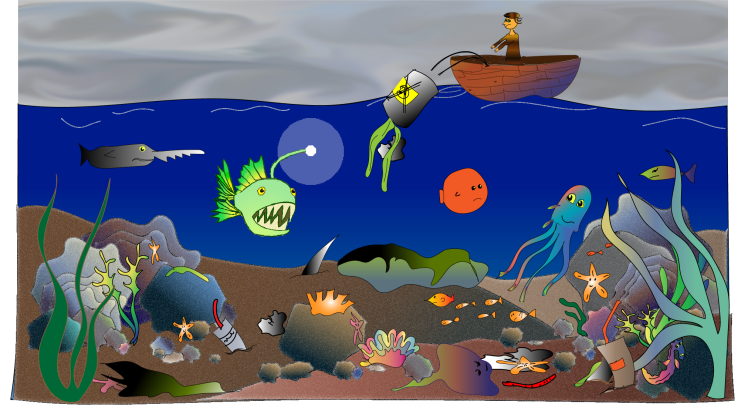
This week I want to continue our rapid ideation project Tincan – Out in the Ocean, focusing on researching different ways to animate the seaweed, and other objects that are in our game.
How the seaweed looks currently
(Figure 1: Norton 2021 Under the Sea Design)
User and Audience response
Past Experience
This week, is one that I do have experience in, especially when talking about the audiences response. My degree was in Theatre and Performance, and one of the areas we focused on would be breaking the forth wall, to allow your audience in, to understand the feeling and emotion that was being portrayed, was key to keeping them engaged.
Especially, if we were due to do some undercover, Political Theatre, where the audience, (thepublic), would not be aware they were getting involved. You would have to tread carefully, by making a scene seem real, but paying attention to those that had started to get involved, that their reactions did not become too aggressive, panicked, upset or anything to the extreme.
After watching the user and audience research Introduction video, by Erik Geelhoe, I now have a clearer idea about how to conduct research, and what qualitative methods are, and how to put them into practice for our rapid ideation session two.
Erik demonstrates how to do the following correctly;
Individual Interviewing
Cognitive walk through/ thinking aloud – to sit down with the participant/with your app, and ask them to think aloud, you want to know what they think of the app, how easy it is to use, what they think will happen when they are about to press a certain button, and anything else.
Group Interview
Focus Group
Asking participants to keep a diary
Observations
Describing what, (and why) participants do something
Self reflections, (by you) the researcher
My Observation
My first approach to observation was for a theatre piece one time. You were asked to observe people more closely, and almost mimic there movements exactly. I had this one experience when observing at the train station, it was very weird, and I followed the timing and copied exactly what this passenger was doing whilst sat waiting for the train.
In doing so, It almost felt like we were one…the process happened for quite a while…
Obviously, when he went to look at me, I looked that way to, so he wasn’t yet conscious that I was mimicking him. This wasn’t harming anyone, or upsetting that passenger at all, which is what we were advised, stop immediately, if you think the observation is offending or making anyone feel uncomfortable. These were strict rules, which actually links to the next part of the blog below, about ethical implications.
Considering the ethical implications of your research.
Firstly, I start by saying that our research activity would be low risk…
We have discussed our view of directing the game Tincan – Out in the Ocean, towards the 7/8 year olds, at the youngest, as some of the facts that pop up, may be upsetting for little ones.
We have focused on the development of our artefact, to be a learning /fact finding mission.
In this case no one will get hurt, the game is only playable on Windows and iMac so far, but if it was to be made into an app, then obviously we would have to go down the path of making sure that the age washighlighted for the recommendation, and that it was noted also during the game play facts will pop upwhich may upset/ disturb the player. That does mean it could only be downloaded by an adult, as they would have to enter the password for their account.
With reference to the above research of our artefact, to make it clear, this was intended to help Patricio and I practice our skills and put them to the test for the two weeks, working on the area that we each would like to use and for our personal development artefacts in the final term.
Different Scenario
However if we was to look at this from another point of view, and maybe set a different scenario, where this was a adult game, with an 18 years of age recommendation on the cover, one of the first things to do, would be to research more into, plat-former games, obviously if using facts, make sure they are true and have come from a reliable source.
We would need to look closer at our findings, and see if this game would be enjoyable, exciting and even moving with the environmental fact content, would there be a market for this kind of game, or would it be better, if we used this to just raise awareness of how bad the pollution is in certain oceans compared to others.
Also it would be important to get together with a focus group, for protecting the ocean and even a second focus group for gamers who like the 18 years of age, plat-former games, paying close attention to pollution, and recycling. Would they be interested in this kind of content?
I doubt this very much, and I do think its ideal for the younger ones who are still learning about the environment and how to care for it.
Medium Risk
Looking at this scenario from a researchers angle, It would still be a Low risk project, unless the content was changed, with Tincan, being redesigned to look really life like, and it had tendency to become more aggressive, and blood was spilled in a very violent way.
Basically if the whole game layout was changed, thats when we have to;
Identify any risks
Carry out an Ethics review
Complete an Initial ‘checklist‘ to confirm the the level of risk
Submit a full ‘Application for Ethics Approval’ to find out what it has been identified as Medium or High.
Week 8.2 – 19th March. 2021
Initial Intention
This is my chance to get some practice with different animation techniques. I have chose to search for seaweed animations, which have been created in animate cc, to look at some oceanmovie scenes which shows the natural movement that happens under the sea, and to pay closer attention to the timing.
Plus I am also looking into documentaries about the Ocean and its sea creatures, to get a better understanding of other things that move very slightly, but still will help to keep the game more natural.
The game feel is very important, as this is not meant to be just a fish in the sea, searching for food, and finding a lot more rubbish, but to help you understand how the main character Tincan is feeling, and everything that is happening around him in real time.
One of the first animations I obviously checked out was “Finding Nemo”.
Here below shows a snippet of the seaweed movement in the animation.
Overview
From watching this part of the animation, you cannot only see all the other sea creatures movements and get a better understanding of the timing, but also I can compare the fish tank/ aquarium plants movements and timings, to the ones that are in the animated ocean.
Next step
‘FindingNemo‘ is from someone else’s research, so next I will be looking at an ocean documentary, filmed live, which captures the real action thats happening at the bottom of the sea, and observe closely.
As we have a set time for this rapid ideation session 2, to make our game interactive, the next point of focus, is making brief notes of how the seaweed sways, what kind of direction, and the different kind of sea plants.
(Catch. 2018.)
Research
Catch is a documentary that reveals the species of sea creatures not found anywhere else, one of which is the Port Jackson Shark, which pumps sufficient water through their gills, whilst lying at the very bottom on the sea bed, waiting for its mate. When it gulps a large mouthful of sand, it is filtered through its gills also.
Most species of sharks have to keep swimming, to maintain the flow of water, to go over its gills to be able to breath, but they don’t.
This next creature however is very unusual. It movements and appearance, is just like a blade of sea grass. The Pike fish blends in with the sea grasses perfectly, when it moves, it can dart away very quickly!
This is a very simple shape, and one that I could add into animating, with my seaweed.?
One other that caught my attention in particular is the Pigmy Leatherjacket, this is the exact colour as the bright green sea leaf.
Now we travel from the coast of SouthernAustralia, to Egypt and the Red Sea.
(Real World. 2020.)
Bright colourful corals are packed beneath the Red Sea, and yet again it has some unique species that could be added into our game. This documentary purely focuses on the different kinds of fish, and some of the deadliest corals.
In comparison to the first one in my opinion, you have a better view of the sea bed, and movements that happen very rarely, but when they do, I noticed that bubbles pop up, very slowly.
Comparison to real life experience
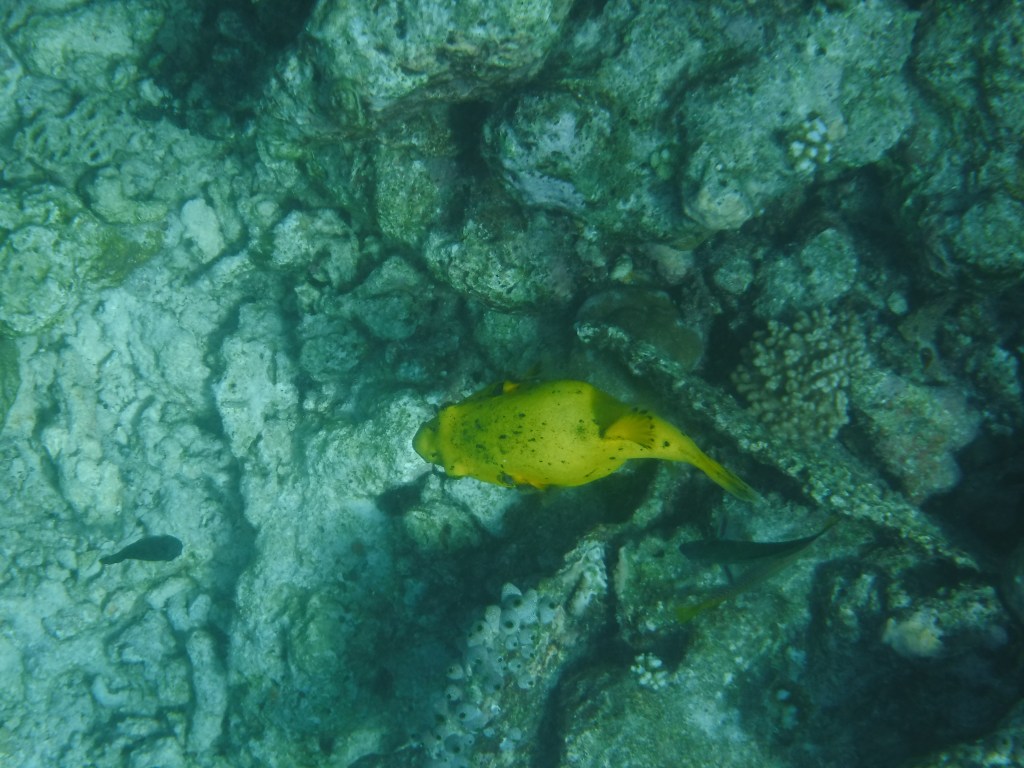
I have been lucky enough to snorkel in the Indian Ocean, when staying in the Maldives. However the experience under the sea, was more amazing in the evening, then in the day time.
My partner and I got to see first hand what was happening to the coral, because of tourists over the years constantly touching it, a lot was dead, or dying. Don’t get me wrong we got to see some of the most scariest sea creatures, such as the Trigger Fish and the Moray Eel, and for me it was my first experience of snorkelling, so very excited and nervous at what we might find.
If we had more time this is something we could incorporate into the game, the feeling of what it is like to be under the ocean, swimming beside some of the most unusual, striking fish.
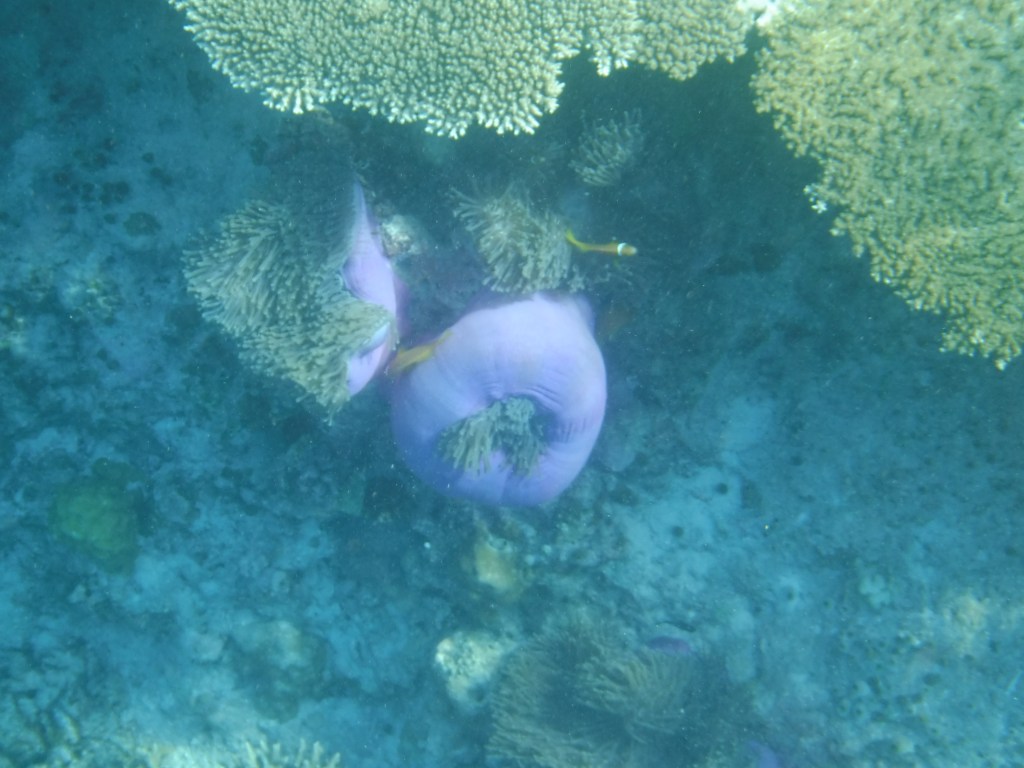
Here are some photos, which should also help with our ocean research for our game.
(Figure 2: Norton 2015 Maldives fish/ Anemone)
Week 8.3 – 20th March. 2021
I have began experimenting with Adobe animate CC, which I have been wanting to do for ages, and with my seaweed goal in place, this seems to be the perfect opportunity, to follow a beginners tutorial, this is what I followed below.
From this I learnt a few of the essentials.
Below is what I put into practice straight away, I have been so enthusiastic about this for such a long time, that I have been hesitating about starting to use this application.
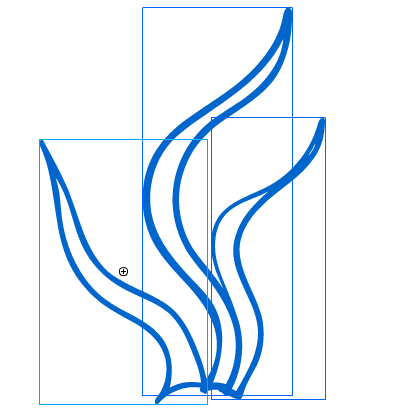
Here is my second attempt on my sea weed shape. I only drew out a very rough drawing to see how I could transform these simple lines with adding movement to it.
Process
The first part of this tutorial was how to draw using this programme, what the brushes are like and how to add shadows with drawing behind and so on with many other buttons.
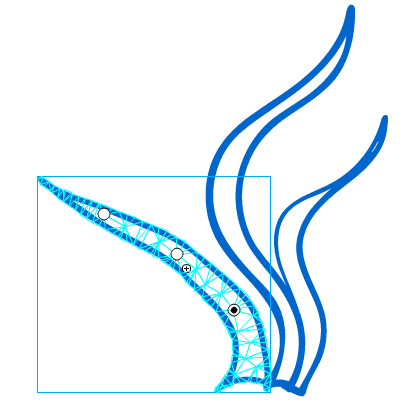
The second part demonstrated how to work on a layer, and add the asset warp tool to the shape, following some key frames and a classic tween, and because it was working with 24 frames per second, (the video was how to create a flickering flame) my sea weed looks like its taking off, trying to leave the ground. However this may look, I am so pleased…because it moved!!!
(Figure 3: Norton 2021 Seaweed Animate cc first attempt)
As you can see from the below, each piece of sea weed, looks like its having a good conversation with the other one. At least I have movement, now to focus on not moving the bottom part, and moving the seaweed more as one.
Result: Conversational Seaweed…
I will quickly mention, that I did find this video after wards, which shows the basics of creating a wave arc.
Seaweed Development
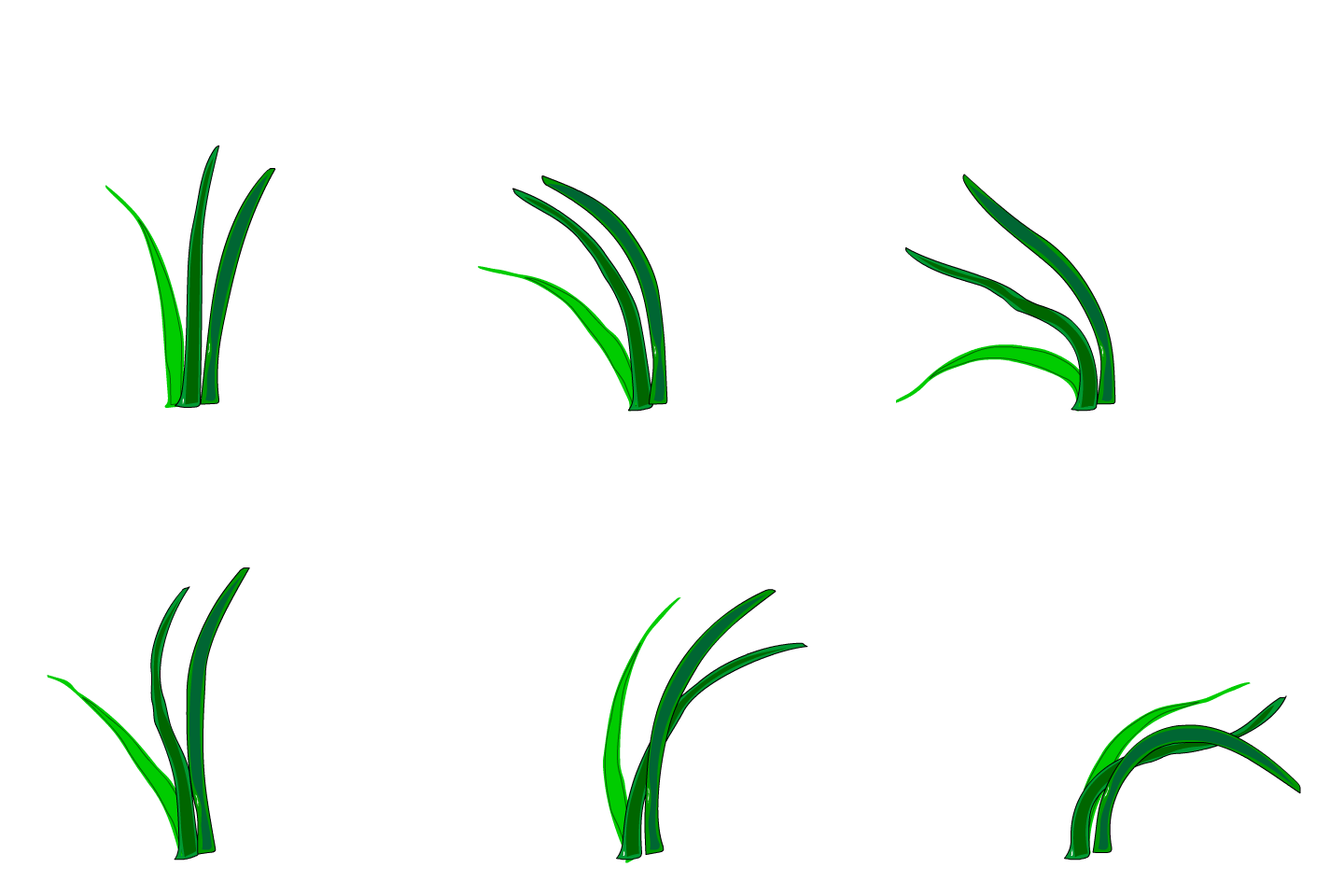
After reading, and following the method on Richard Williams, ‘The Animators Survival Kit’, I put into practice the approach of placing each piece of sea weed on alternate timing patterns, and incorporating the shapes outlined from the above video.
This was the result below, finally I was so pleased, as using Animate cc, started to become clearer, and these principles really worked, more to point we could use it in the game! I shall be reading this book a lot more, it was such an improvement from my original ‘conversational seaweed‘.
I was so determined to animate something for our game, and through the whole process I have began to speed up with all the apps I have been using, such as Photoshop, Animate, Trello, and even learning a little about creating a Repository.
Here is all the areas, we have been focusing on together, constantly collaborating, staying touch to share our ideation techniques, and work on what could be improved, and things that maybe wasn’t quite working.
(Figure 4: Trello 2021 Deb and Pat’s Rapid Ideation Process Continued)
Demo of Game – Tincan
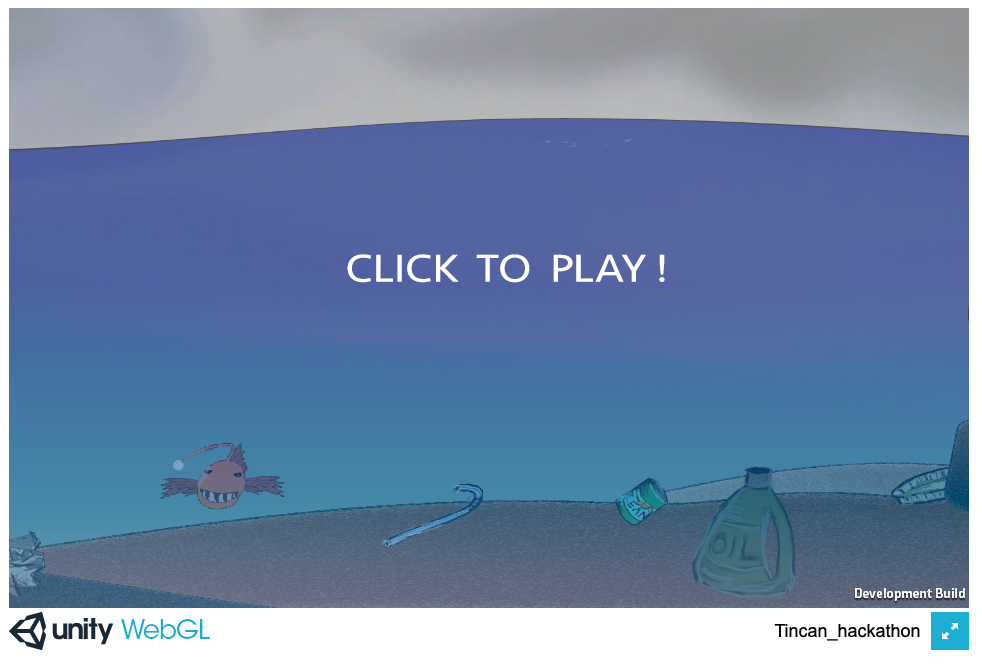
Below is the Video of the first demo for Tincan Out in the Ocean.
Video – current gameplay – Left and Right swimming no eating.
Week 8.4 – 23rd March. 2021
Below is the game demo for Tincan Out in the Ocean, to show the final outcome, of our environmental artefact we have created. (This may open in another window.)
Evaluation
When Patricio and I decided to work to together to create a new artefact, that was intended from the start to be a game. I think we both assumed as he had a character of a fish as an animatic already, that the process would be long, but not too difficult.
Therefore, after the initial set up of deciding what I would start working on straight away, whilst he was testing Unity (which the game would be created in), alongside GitHubto check that the assets used was stored in the correct place, and the files wouldn’t get corrupted.
I went ahead to set up a Trello board for us, so we had something to follow, and knew what had to be done, what we were working on, and what had been completed.
This was a big support with helping us to organise ourselves, and know what each other was doing. It made you feel a little more at ease, due to being able to design the background of the Trello board, to suit the project you are currently working on.
Process
Patricio had collaborated with me about the fish he had already created, and his notion of a creature in the sea fighting human contamination, the moment he said this, my image was an alien, that would have a globe over his head, and had been sent down to earth, specifically to go into the sea and go to the bottom, and collect as much trash as possible from the seabed, which would lead to more points for certain items, and less points for others, that way we would be showing that the ocean needs some attention, making younger ones aware of the pollution in the sea, and because the main character was an alien…obviously the alien could be designed however, and wouldn’t upset anyone, as it wasn’t based on anyone.
But this is not what happened, the first priority was to get a background created.
I got to work paying close attention with crafting a new background, for the creature (Tincan).The layers I worked on was created In Illustrator, which were quite dark, especially the sand hills/ sea bed and rocks beneath, as I wanted to focus on the environment looking sad, dark, and murky, with that game feel in mind. From this starting point we began to look closer at ways to show how ill Tincan was getting, and after I experimented with some different blends, we both agreed that thekey colour was sick green, and literally he just needed to turn back to normal, which would be sick green to orange.
Research to continue
We found more research needed to be done, about how much plastic was actually in the ocean?, what was the outcome for the fish, birds, and people? Whats the worst polluted country’s?
One of our peers suggested this documentary called ‘The Plastic Ocean‘, which is actually what encouraged me to learn more about the different and unusual sea creatures, that are rare, and at this stage, may not be around that long.
This really helped us to focus on the key item of food for our main character Tincan, that being the Shrimp, as this was already suggested during out ideation stage, but discovering that this little fish when collecting plankton, which in many cases is actually micro plastics, (all kinds of plastics over time that has been ground down to tiny, winy particles), is actually the start of the food chain in the sea, and every slightly larger fish, that eats each other, would be getting this in its blood stream.
So I would next be focusing on creating some good sized rubbish pieces, and a good sized shrimp as the main food source for Tincan. Whilst Patricio, was coding Tincan ready for the first show and reveal week 7, with an aim for Tincan to move left and right, to move through the trash and between the rocks, seaweed, that we had so far added to the game, plus with a basic score counter, that he had been working on, with a focus on showing his health improving or deteriorating.
After this initial presentation, we could see what we wanted to improve for the second week, we knew what could be achieved, and one of my goals which I was very nervous about was creating some animated seaweed.
I set to work with creating more key trash items that I remembered I had seen in the documentary, and also I started working on the audio sound effects, which I had a lot of fun with, as each time I would record my self making blob noises, or munch sounds, ready to apply to our game. I hear the birds in the background, which we found very funny, I had to record them again, so it would sound more professional.
I suggested a ogg file on the website, sound image.org which Patricio recommended me for when I wanted sound for my first rapid ideation project. The piece I found for Tincan though, we both thought was perfect. But the next thing for me to do and complete….was animating some seaweed.!
Animating seaweed for the first time
Now to start this process was quite straight forward, I was extremely keen to start using Animate cc. As I had been putting into practice a few other sessions, of learning about the buttons, the screen, where the assets are kept, etc. However, when researching online I was sure I remembered seeing the word arc, and I kept searching for this, and each time of asking “how to create an arc for seaweed in animate cc” I was just getting random answers, thats why the first animate tutorial that you can view above is not relevant, as it focuses on a flicker flame. I only chose to use it as it said animate cc beginner. Though this is probably the reason why my first seaweed come out so fast, and was not grounded.
From this discovery in animation, it was still worth it in my eyes, as I still got to see the basics, of how she moved the flame, by the asset warp tool, and to understand about working on each layer. Which was a good starting point, but with little advise from Patricio, and a good old giggle, he recommended the next video tutorial for me, for how to create seaweed motion using a wave arc, he advised me to focus only on 3 parts of seaweed, and to keep it simple. That is what I done, and in doing so, created some animated seaweed that could be put into the game, which I was very proud of.
Re – testing the Final Demo – Tincan – Out in the Ocean
We both re – tested the next version of Tincan, you could hear the music, Tincan would eat the trash, his colour would turn green, back to orange, health and deterioration points would show on the score/points counter, and the facts I got from the environmental documentary, would pop up in my a natural looking bubble, and would float to the surface, making who ever was playing aware of what is happening to our oceans.
Very pleased with the out come, we both think its something we would like to develop even further, and are proud with how much we have achieved within the 2 weeks.
I have been researching Olaf Storm – with his photoshop tutorials, his method uses video layers, which is what I am now using. He looks at frame rates, characters on 2’s and the other small movements like feet and and hand movements on 1’s.
He showed the smooth transition when using an onion skin, which I believe to be like a sketch over your original character, for you to redraw over, each time slightly adjusting your angle, to where you want your character to move. I haven’t used the onion skin yet…but it is next on my list. The effect you get afterwards is amazing, and makes the object or character movement a lot more fluid, but takes a lot more time.
Method Olaf uses;
Draw very rough to begin with
Then draws more detail
More detail – until character or objects have shape and definition
Finally he adds a colour layer
This process takes a lot of time, which I don’t have for this rapid ideation session.
My Process
Draw my background with enough detail to set the scene – convert to regular layer.
Draw my character with detail from the start -Focusing on my 6 points, I had specified from the last part of the rapid ideation brainstorm session.(Artboard 4)
Then copy the original character layer, and place above
Select and manipulate, the arms, tail and head in the first few frames, then start moving the wings and mouth, for the frames remaining.
As you are doing so, you only need to draw in occasional areas of colour, on that next layer you are working on. (shadow maybe left from last movement, this will need to be erased.)
Add music – researched humorous theme tunes for animations, or a start of a game.
Result
Here is the background for Ickle, I created it in Photoshop, paying close attention to the detail, and transferring one of the themes from the headline: colours are very important, so everything must be vibrant.
Combining SpongeBobs character; bright, fun, and friendly.
Plus the theme of loosing a friend; that is where the main character Ickle, will have to find fairy’s/ elf like creatures, in order to grant him his original wish. He is hoping to be small again.
He will need help from all; to find out where the creature is, from all those years ago.
Figure 1: Norton 2021 Background for Ickle
The story behind Ickle;
When Ickle was born, it was neither Little or Insy, but was rather Ickle.
One day, on his 3rd birthday, Ickle made a wish, that he could be a ‘tinsy, winsy bit bigger ‘
From that day, he has been searching for the fairy/elf creature, what ever it was to revisit that wish, and undo it.
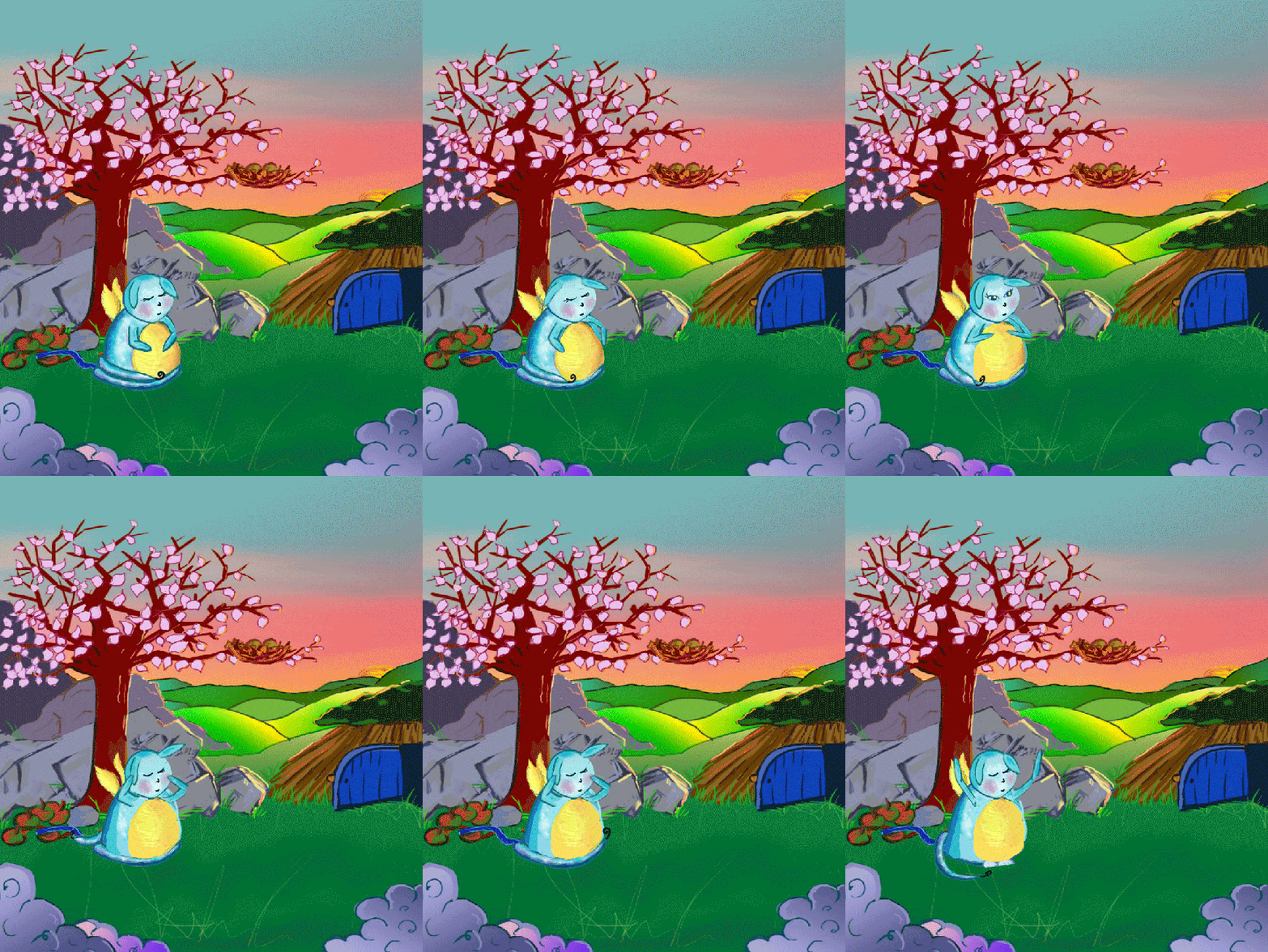
Please see below, my first animation ever…
Ickle Waking Up
Week 5.2 – 1st March. 2021
Holistic Reflection – The Five Key Skill Domains
This week are asked to look into the five domains, which are important, when writing reflectively.
Dispositional Domain – time management/ motivation/ general behaviour/ discipline
Interpersonal Domain – communication/ listening/ problem solving/ decision making
Cognitive Domain – strengths/ weaknesses/ approach to new skills/ how to excel
Procedural Domain – assessing current skills/ how to improve
Below is the points of how I presume I write, learn, and develop my ideas.
My focus always starts with dispositional domain; motivation to learn something new, begin a brainstorm and see where it leads.
Next, after the initial concept, would be the procedural domain; assess what skills I would need, or I have, and how to put them into action and look at what I need to improve.
Which leads to the cognitive domain; if I need to learn something new, I go straight to LinkedIn Learning, and start immediately, and making notes.
As for the next part of my process, to put what I had learnt to the test. However the affective domain takes over; with excitement leading the path to a new creation, because of a recent skill I just learnt, the Interpersonal domain; assertiveness in particular is pushed to the side.
Results of how I have used the Five Domain’s so far;
After looking through my posts, these are the results for each domain;
Dispositonal – 5
Affective – 5
Interpersonal – 4
Cognitive – 3
Procedural – 6
I have generally tried to always include the Disposition domain; especially my motivation behind an idea, but not necessarily time management.
I always include Affective domain; how I feel, and any experience I have or want the gamer to have. I think this is very important, it helps tell the story behind, what you are trying to achieve, or why you want to look into that particular area.
As for the Interpersonal domain; This is slightly lower, I think its due to me making a decision, getting excited about it, but then thinking about alternative pathways, which then halts my progress.
Cognitive domain; this is the lowest , and I know why because when I am learning a new skill, like 2D Animation Principles, I sit and do all the learning at once, even if its hours on end…and write continuous notes, thinking I am going to take it all in. . .but its not possible.
Finally for the Procedural domain; This is what I am trying to do consistently, though too much at once.
Nature of Reflection
Throughout the start of this course, I have tried to reflect in a way that allows the viewer to see from all angles, how I feel about the start of a project, the initial concept, what my development process is, and the end result. However, I personally feel some areas are out of my control, to be clear, its when we receive a new assignment. I focus too much on how amazing the artefact/ project could be in the end, rather than focusing on one area at a time.
This hinders my progress, and now after looking further into SMART goals, I feel more at ease and in control.
S M A R T (goals)
S – Specific – the 5 W’s (what, where, when, why, who) think about How?
M – Measurable –
A – Achievable – Push yourself, but not so much that it is unachievable.- Think about – can you achieve it within the set time? have you got the money? or have you got the skill, or will learning a new skill set you back from putting your concept into action?
R – Relevant – Are you the best person on the team to do what is required, or is there some one else, who has more skill that particular area?
T – Time – bound, specify length of time to do course, how many hours you will commit to train each week?
From this analysis of the five domains used throughout my critical reflective journal, it has automatically helped me to create my SMART goals, as I can see my flaws very clearly,.
1)Dispositional domain: time management, I need to do an equal amount of each: Reading, Writing, LinkedIn learning, Practicing, Creating, this is achievable if I do an hour of each, every day.
2) Interpersonal domain; Must make a decision and stick with it, work out initial plan, that I can do whilst at home, in a day by myself, to help towards the current project that I am working on.
3) Cognitive domain; Must study an hour at time, when learning a new skill. Must have a break, and practice what I have learnt first, before jumping to the next stage. Once the new skill is in practice, I can get a better Idea of the length of time to complete this task.
The three SMART goals are just what I need to speed up my rapid ideation processes, to keep focused, but relaxed, knowing I am hitting my targets, and have time to spare, if I need it.
If I was in a creative role now, I know these would already be in place.








 RALPHY GETS ANIMATED..?
