Categories
GDD710 - Module 1

The Big Reading Week.

Week 6.1 – 10th March. 2021

The Retrospective

After looking at the article heartbeat retrospective, and closely at the common pitfalls, I understand this to be a workshop of reflection, structured with the steps as shown below;

  • Regular meetings with your team to simply debrief.
  • Everyone should feel comfortable to speak, just highlight a few areas, speak the facts only.
  • Discuss the relevant areas that are currently affecting the iteration process.
  • Have a couple solutions to work with, to keep simple.

Their are three main areas, that are considered throughout the retrospective;

  • What should be started?
  • What should be stopped?
  • What should be continued?

My Start item will be: (marked with two stars **)

  • Reading one journal article a week to inform your practice
  • Writing a progress summary in your journal before you attend the webinar
  • Writing a weekly plan to help structure the work **

My Stop item will be:(marked with two stars**)

  • Burning the candle at both ends **
  • Working in a silo and not seeking advice and support from peers
  • Leaving it until the last minute to write in the journal

My Continue item will be: (marked with two stars**)

  • Posting in the forums on a regular basis
  • Follow tutorials as part of the self-directed practice**
  • Attending the webinars

Both the start and stop items are used automatically when my SMART goals were noted, as they seem to follow through what I have put in place.

Retrospective is key to reflect on what happened, any iterative processes put in place which didn’t work, analyse why and devise a plan to avoid happening next time around. But keep simple.

Session 1 Rapid Ideation – Reflection

Looking back on the development of rapid ideation session one, I know for sure that there was room for improvement. I wish I had, had my SMART goals in place, and only learnt a little about 2D animation for example, and not to of tried using so many new applications, which just holted my progress altogether, and made me question, if I was even capable of learning a new technical skill this quickly.

Pages and Posts

That doesn’t even include, the fact of which I was struggling with writing a post on here, and realising I had my entries as pages, not posts. This was a big turning point for me, after working this out, I was able to add tags, and categories, to make my site more accessible. This is where I started to understand the need for an organised, well structured website.

Week 6.2 – 11th March. 2021

SMART – Ready – SET – GO !!

To reiterate, in this coming webinar, when we get out next rapid ideation tool to experiment with, I am going to do things differently.

I have my goals in place to help with organising my time:

  • To do an equal amount of research; including reading, writing, watching, linkedIn learning, and practical.
  • Make sure to stick with my idea, not to get distracted by all other possibilities.
  • To learn new technical skills for an hour at a time, break, and try out what I have just learnt, rather than jumping to far ahead!

Since making my self SMART goals, I have started to continue reading ‘Level up’, to understand more about the process of creating a game from scratch. This is where I put my organised schedule into action.


In Chapter 4 ( level 4 ) titled; ‘You Can Design a Game, but Can You Do the Paperwork?’
Scott Rogers states;

“It’s no crime to be a perfectionist, but many design issues can be thought out and designed on paper first before a single pixel is rendered or a line of code typed.”

(S, Rogers. 2014. p90)


This immediately grabbed my attention, my determination of trying to create something that will look amazing on screen, and helping to engineer a game/ app or animation that you just can’t leave alone, is all I seem to focus on!

This is exactly what I have done with with my personal development, and because of trying to add code, and bring Ralphy to life in only a few frames, it was impossible to get a decent animated character.


I think it might be worth going back to basics, sticking with drawing and scanning my work, ideas and laying out concepts on paper, before even thinking of bringing my illustrations to life.

After all this is what Briggs would do when he originally created ‘The Snowman‘, and he is one of the illustrators, who pays very close attention to adding emotion and movement behind all of his sketches, before even laying them out onto a storyboard.


Week 6.3 – 14th March. 2021

Points to remember

Rogers also discusses in his book ‘Level Up‘, how important it is to be mindful of your peers, as we all have our own limitations.

We first discussed this in week one, talking about Scrum agile framework …It’s vital we have someone in charge, ideally that can make sure that each person, (when in a team) is doing their part, and has been assigned the correct area, that matches their skill.
Other wise, this could dramatically hold everyone up, especially when that person doesn’t quite understand what is expected of them. 

Throughout this course, I feel like I am on the biggest learning curve ever, with excitement leading the way, I pinch myself just to check that what I am creating is real…and can be improved or developed in one way or another.

Kanban

I am now starting, very slowly, but surely to understand the nature of reflection. 
I have started to read another book, which my partner has actually recommended;

The Toyota Way : 14 Management Principles; from the Worlds Greatest Manufacturer.

This actually links onto the Kanban Method that I have been practicing.

The book reveals the methods and approaches, used in production;

Jidoka – Originated from an invention from Toyoda, a carpenter who made wooden spinning machines, and in 1894 the manual looms he started experimenting with, were low in cost, but worked better than his existing looms.

“designing operations and equipment so your workers are not tied to machines and are free to perform value added work.”

J K, Liker. 2004 P16

This step would lead to the creation of a much broader System!!

Toyoda; Unhappy with seeing his mother, grandmother and friends working so hard, this sent him down his next path, and took production to next level.

“He wanted to find a way to relieve them of this punishing labor, so he set out to develop power-driven looms.”

(J K, Liker. 2004 p16)

This intention was crucial, and helped to build TPS (Toyota Production System).

  • Jidoka (automation without human touch)
  • JIT ( Just In Time) – to order what parts you are running out of, just before you do runout.
  • Continuous Flow (focusing on today, and tomorrow)
  • Kaizen (change for the better)

This is what brings us to Taiichi Ohno – the founder of the TPS, (Toyota Production System), which has a strong focus on Jidoka, Toyoda’s sons approach JIT, (Just In Time) and his own discovery Continuous Flow. He also talks about Kanban and Kaizen.

He compares Kanban to a gas gauge that is built into the car – when it signals – you know you need to fill up. As for Kaizen, making tiny improvements is just as important when achieving a lean goal, which eliminates all waste, that adds cost without adding to value.

References

Heartbeat Retrospective (2020). Available at: https://bit.ly/3b17dtO [accessed 10 March 2021]

ROGERS, Scott. 2014. Level Up ; The Guide To Great Video Game Design. 2nd edn. John Wiley & Sons, Ltd.

LIKER, Jeffrey K. 2004. The Toyota Way ; 14 Management Principles from the Worlds Greatest Manufacturer. McGraw-Hill.

Categories
GDD710 - Module 1

What is Creative Activity?

Week 2.1– 2nd February. 2021

This week we are encouraged to look at what makes us creative, does it come from Inspiration, are you only creative when you feel in a certain mood, or is it drawn out of you when you listen to certain sounds, or are you just born with it?

I have always had a big imagination, and always thought of myself as more of a creative individual. But after reading the responses from some of my peers on here, I am reconsidering?

In the book, Oxford Companion to the Mind, the section on creativity, actually reveals that the unconscious brain, is far more creative, than when it is conscious.  

“There are many instances of such ‘unconscious’ work, one of the more dramatic being that of the German poet Rainer Maria Rilke.”

( R, L, Gregory 1987: 171)

This statement continues to explain how the poet, in 1912, whilst trying to write a long poem, ran out of inspiration, and in doing so he got so frustrated, which led him to go into a state of depression.

However, in 1922, after the First World War, he started to write again, and from this he wrote a series of small poems, the Sonnets to Orpheus. At this point in time, he had no intention of writing anything in particular, but 18 days later, he produced the most beautiful poetry ever.

This was just one example that I came across, that delves into creativity, and looks at how and when the brain is at its highest peak to creative innovation.

Past Experience

I can say that this is relatable to me, due to times when I push my self to get another book title out, and to think of the next story for a children’s book, nothing happens!

Though when I simply have a break, get out into garden, listen to birds, watch the mouse running through the stone walls, or finding a baby woodpecker, anything that happens, in the garden, is my place of inspiration.

When I dream and go into a deep sleep, as my dad would say ‘meditate‘ on the idea…the next morning I can easily write what I dreamed about down, as it stays with me. I have always said, “I can see it so clearly, that I’ll paint it for you“. Which is what I end up doing, only using digital tools instead.

The correct name for this faze is the Incubation state, which is looked at in more detail through out the ICEDIP method below.

What is the ICEDIP method and can I relate this technique to my practice?

Tanya Krzywinska explains ICEDIP (otherwise know as the Iterative Method) is made up of a numerous amount of fazes.

  • INSPIRATION – Random, mad, intense, dreamy ideas that arise.
  • CLARIFICATION – Define the ideas, look at what you want to achieve.
  • EVALUATION – Evaluate the purpose of the idea.
  • DISTILLATION – Decide what should be kept from the initial concept, and what should be removed.
  • PERSPIRATION – Finally put the idea into action!
  • INCUBATION – After everything is in action…you must let it be. Sleep on it, and refresh the next day.

Personally I feel that I only use half of the process that is required of the ICEDIP method, with anything I create. For me inspiration comes from everywhere! Although that is from a children’s book illustrator perspective, as I have never had the design or creative career as of yet.

But as I mentioned earlier, the incubation stage for me, is probably the most important. Even if I have been inspired, clarified my new story and my illustrations are laid out, I know the purpose of the book, and have removed any line of text that is not important, and the whole book is ready to submit to the publisher…I still want to go to sleep with something else on my mind, so then in the morning, I can sit and read it all the way through…and double check on everything.

Creativity

When researching further into creativity, I tried to look for practitioners artists, poets etc, to get a different perspective. One of which was Joanna Dickhut and her research paper, that takes a close look into different personalities, and also different kinds of creativity.

Creativity in its simplest form

She discusses simple examples, one being: “if someone runs out of fuel on the highway, the person must think of a way to get to his/her destination, and this requires creativity even if it is in its simplest form.”

I was so surprised to read that something so straightforward, that the majority of people that have a car, would naturally look for a garage, or would have topped up beforehand, or the car would automatically come up with a warning that you are low on petrol/diesel.

It has made me question, if creativity is something this simple, which requires from my perspective, hardly any creative thinking, then what does it mean when you can craft something from scratch, you’ve drawn it, you’ve animated it, you’ve made it into a movie, or an application.

  • Surely this must be the peak of creativity, compared to an everyday scenario?

“Creativity is not the finding of a thing, but the making something out of it after it is found.”

(Dickhut 2003: 1)

Dickhut starts off with this quote from James Russell Lowell;

The “finding of the thing” directly relates to my first step in creation for a new story book, but in context with how to animate characters etc, this will be a completely new process.(Steps mentioned earlier through using the Kanban method)

There is no “finding of the thing”, because until I learn the stages of how to put an animation together, I cannot start the development process.

I am eager to learn all the animation techniques under the sun, however I know if I try and cram everything together, I won’t get anything! I have to be patient and learn animation timing and practice with simple objects first, and find some beginners tutorials.

Dickhut compares different personality’s, and explores the relationship between creativity, psychoticism, and openness to experience, and looks into the function of Artificial Intelligence. she concludes the process is not precisely known, but there are thoughtful speculations which remove the mystery from creativity and the stigma that it is only being possessed by geniuses.

(Dickhut 2003: 1)

  • Could artificial intelligence be the next stage to creative innovation?
  • Could systems really be designed to create unpredictable decisions?

Garden Inspiration

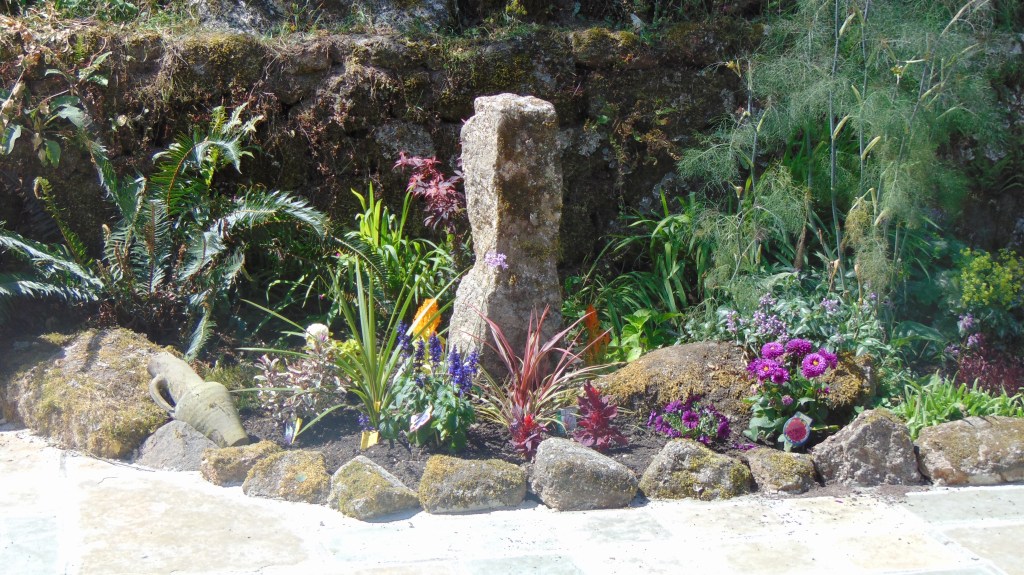
Below is a simple garden concept, I sketched up on an app, I took a photo of the area, we wanted to change, and simply drew on the flowers, trees, shrubs, and grasses that I thought would highlight our standing stone.

(Figure 1: Norton 2019 Original concept for garden design)
(Figure 2: Norton 2019 Garden Design Result)

This design above, was simply working out the colours I wanted, and placement. This was just from being inspired in the garden, and being in the moment.

It was designed – put into action – the outcome was very similar to what I first sketched. 

  • I cant help but wonder, if an artificial intelligence system could people, start to loose there current work roles?

The whole notion of systems reacting robotically, and being predictable I can just about grasp, but unpredictable, honestly makes me feel uncomfortable, yes it would be very impressive, but if they where unpredictable, would this be for a set time, could you press a button and command the system to go into “a creative mode,” or could it do anything it wanted, any time?

Hand drawn Illustration

Illustrator Raymond Briggs, discusses his illustrative concept, when working on his animation, “The Snowman” from his interview back in March 2nd 2017, for BBC News night.

“I don’t think about what children want. You just get an idea and you just do it.”

(Briggs, 2017)

I chose to look up more information about the The Snowman, as this was one of my first inspirations for animation with no text, and links directly to my current practice for Indie Game Development. If I can create something that is moving like, ‘The Snowman’, I will be very proud.

Week 2.2 – 5th February. 2021

How Do I Foster My Creativity?

I channel into my surroundings, usually write down the name of a new book title first, then jot the ideas down, in order how the book begins, the middle and possible different endings.

But when I start to type the story up, and lay out the text, it is only then, that I suppose you could say, the waterfall method is put into action.

  • Faze 1) Plan – What typeface to use, size, colour, and place.
  • Faze 2) Define – Amount of text to go on each page.
  • Faze 3) Design – What illustration to put on each page, checking it goes with story.
  • Faze 4) Build – Start illustrating
  • Faze 5) Test – Re – read and check against illustration
  • Faze 6) Deploy – Send off to publishers
  • Faze 7)Maintain – This only applies in one way to my process. I still must maintain contact with them, to send anything else they require usually, Blurb, Retail description, Author about page. This holds up production if not sent ASAP.

Reflection is not mentioned due to you can not reflect on the overall book, until it arrives in the post. However I still like to reflect, when the whole book has been completed, before it is sent to the publishers, just to do a final check, with a clear mind.

Computational Creativity

Simon Colton discusses software and its amazing abilities and how its produced. He explains that a lot of people are misunderstood, in regards to their knowledge, of what software is and can do, how important it is, and how creative it is. Artificial Intelligence is one of those important systems, even if it does make me feel a little uncomfortable.

One of the many theories he discusses, is that ‘creativity is an opinion’.

After researching and seeing through the eyes of Dickhut and her analysis on reviewing creativity, and looking closely at different personalities and the simplest forms of creativity, with her example: “if someone runs out of fuel on the highway, the person must think of a way to get to his/her destination, and this requires creativity even if it is in its simplest form,” thinking that creativity is just an opinion is not hard to understand.

From my perspective the above example is not at all creative, I understand it to be a normal everyday scenario, that doesn’t happen very often, but if it does we just deal with it, and what is required is just some planning before a journey.

Week 2.3 – 7th February. 2021 

Challenge Activity 

First reaction was where to start? Anyhow as I am developing my knowledge of games, I thought I would begin with… 

Little Nightmares: Puzzle Platformer Horror Adventure Game

Developed by Tarsier Studios

  • Must choose an existing artefact that is the output of someone’s creativity.
  • Modify the artefact in some way using the techniques you selected.

I initially thought I would use the mind mapping technique. But, I chose to stick with Brainstorming. Here is my process…

(Figure 3: Norton 2021 Little Nightmares Brainstorm)

(Figure 4: МХК46 2019 Little Nightmares )

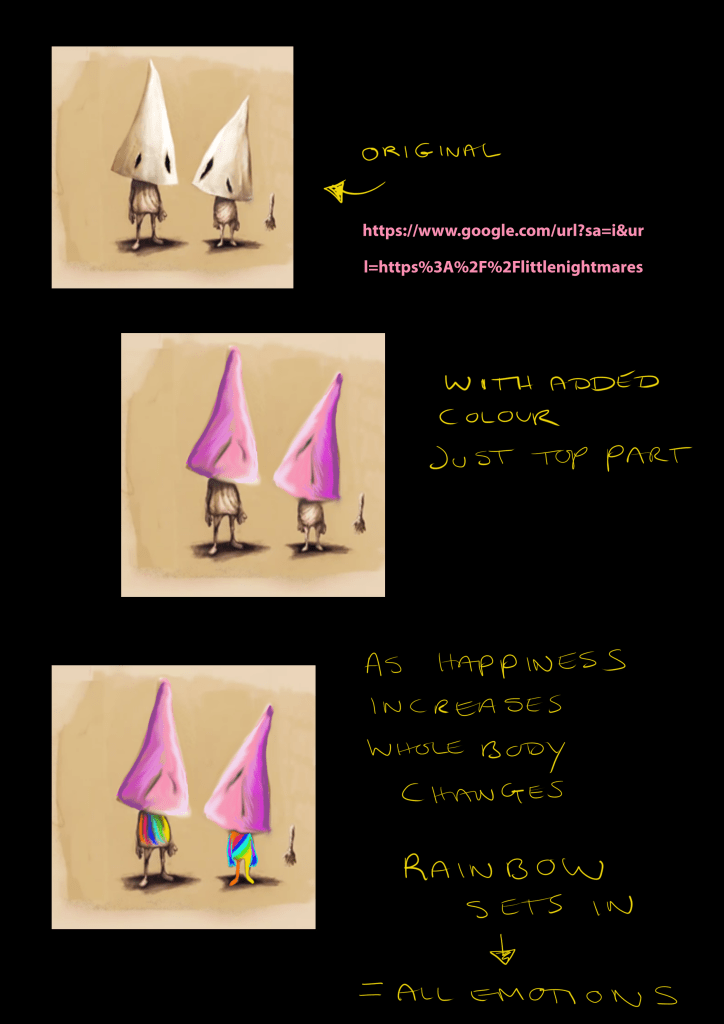
(Figure 5/6: Norton 2021 Little Nightmares Character Development )

Experience of game

When I first played this game I was on edge! It did give me ‘little Nightmares’, being so dark.

I started off with an initial concept in mind, and asked myself the question;

  • Would it be possible to make everything really colourful, but still keep an eerie feel?

To clarify, make the entire background really colourful, with psychedelic colours, but keep everything else such as; the characters, objects, furniture music sound dark.

Anyhow after researching about the nomes a little more, I discovered they are hypnotised. This means …we need to save them!

Nomes

With this new concept in mind, it drew my focus towards the nomes feelings, that they may light up with more colour, as happiness increases. Each time another nome is saved, the music creates a nicer atmosphere, other instruments could start playing, and maybe this could be done in a slight humorous way to show their individual characteristics and personalities. After all they were once children.

Once I started with the brainstorm technique, I felt like I was on a wave, and realised without consciously thinking, I automatically had floods of concepts for the rest of the game layout. They could be modified many ways, to create a new artefact. 

Experience of activity

I found this exercise challenging at first, because of the amount of different ideas I had for each area, which then just halted my progress altogether! However a decision was made on the name of the game I would brainstorm with, and from there I allowed myself to be immersed in this dark story. I was really pleased with the outcome.

References

BRIGGS, Raymond. 2017. ‘Raymond Briggs on The Snowman, Fungus the Bogeyman and More.’ [online]. Available at : https://www.youtube.com/watch?v=M9hRSDDYroE [accessed 9 Feb 2021]

DICKHUT, Joanna E. 2003. ‘A Brief Review of Creativity’ [online]. Available at : http://www.personalityresearch.org/papers/dickhut.html [accessed 5 Feb 2021]

GREGORY, Richard L. 1987. ‘The Oxford Companion to the Mind’. Oxford University Press.

KRZYWINSKA, Tanya. 2006. ‘Creativity & Innovation: Games and App Development.’ [online]. Available at : https://flex.falmouth.ac.uk/courses/911/pages/week-2-what-is-creativity?module_item_id=49143 [accessed 2 Feb 2021]

The Gaming Beaver. 2017. ‘Nomes are the children!? – Little nightmares + The Hideaway Explained’. [online]. Available at : https://www.youtube.com/watch?v=CcGttS6za8E [accessed 7 Feb 2021]

Full List of Figures

Figure 1: Norton 2019 Original concept for garden design

Figure 2: Norton 2019 Garden Design Result

Figure 3: Norton 2021 Little Nightmares Brainstorm

Figure 4:  МХК46 Little Nightmares Wiki 2019 https://littlenightmares.fandom.com/wiki/Nomes

Figure 5/6: Norton 2021 Little Nightmares Character Development