Categories
GDD730 - Module 2

Industry Insight – Part 1

Week 9.1 – 23rd July. 2021

Work Experience

This Week commences with asking us to share our experience of “working in a team with specific industry insight“. I have never had the opportunity to work with a games company, but after everything I have been researching and putting into practice, this is something I am keen to start!

I have even began to experiment with Unity now, using my own art, and some of the props from Unity’s Playground.

I want to learn more about moving the character from a to b, practice increasing the distance that the character travels, with a variety of different moves. But in keeping with my method, Kanban, I am aiming to achieve one thing at a time.

Below is the first time, of putting a whole layout together myself. The only assets that were not my creation was the character, the wooden flooring and log flooring at the bottom of the mountain, the box down stage left, and the staff behind the character.

(Figure 1 : Norton 2021. trees/foliage/mountains/background – in Unity)

Development

I found when I first pieced this together, the result of the character moving from the wooden square, (downstage left) to moving up the hill, still didn’t work. However I wanted the staff to fall from the sky, and land in the bush, then a slight particle/magical stars effect would beam off, (highlighting the object, so you know, you need to collect the staff).

1st Problem

The staff landed straight, then flopped to one side and dropped down. I wanted to show it getting stuck in the bush, and lodged at an angle, and I wanted my little character to move towards the staff.

1st Solution

I changed where I placed the 2D collider, and this is how it now plays. I added the 2D capsule collider around the staff, plus made the character follow the target. The staff is now the target.

The below link works on browsers such as Safari, Google Chrome, and can be watched only on mobile phones. Hopefully you can view…

Don’t forget to press the right or left arrow..on your keyboard.

http://www.keepitburningthegame.com/Unity/debbs2/index.html

REALM

In the Article – Embedding Reflection and Learning into Agile Software Development, Babb, Hoda, and Norbjerg introduces a new method called; REALM (Reflective Agile Learning Model). It shows the results from other development practices, in India, New Zealand and USA. They show how we as practitioners could integrate reflective practice in agile software development, the benefits of the method, and ways we can adapt and evolve when applying it to a software team.

  • REALM uses reflective practice to develop micro habits for uncovering tacit knowledge among a software development team.

After researching Realm, I understand to be a way of putting a retrospective, and many other agile methods into action, to aid towards the teams growth and development. Also it reminds you, with all agile methods, its key to practice continuously, otherwise the process of producing the artefact becomes the only focus, and reflection is easily forgotten about.

They specifically focus on Tacit Knowledge“, and find ways to express what is difficult to others to understand such as; personal experiences, insights, and intuition.

Reflection-on-action is the “after-action report” on how repertoire has changed. It’s during reflection-on-action that teams attempt to answer questions regarding what to keep, discard, and modify in repertoire.

(Babb, Hoda, and Norbjerg. 2014)
.

Agile Methodology – Kanban

Since starting the Masters in January, once we researched into retrospectives, and agile methodologies, I chose to stick with Kanban.

I have tried to apply the way of thinking throughout my blog, and more so throughout any research and new processes I have learned.

I find retrospectives to be a positive step forwards in any project that I have completed so far, and find it rewarding knowing what you have worked on with the team is being discussed. It either works, has to be removed, or be adjusted, but either way the fact that your teams work is being talked about, makes you feel like, what you are doing as that individual is important, and is significant to the final artefact.

Good Crunch

The article The cruel optimism of “good crunch”: How game industry discourses perpetuate unsustainable labor practices is specifically based on Game Developer magazine and Game Developers Conference presentations. It discusses the good and bad crunches that happen through the development of a game, explains what a crunch is, and advises you about careers in game development.

Crunch is a term used to describe periods of extreme workload

(Edholm et al. 2017)
.

Their overall goal was to understand how crunch continued, despite growing attention to its costs, assessing the themes of bad crunch and its potential outcomes, before discussing good crunch as a form of cruel optimism.

  • Their research aims to encourage developers to aim for a more sustainable and progressive labor practice.

“we found that developers were very aware of the costs of crunch, sharing frequent horror stories of lost weekends, destroyed relationships, and even physical health issues arising from overwork.”

(Cote and Harris. 2021)
.

The above quote I can relate to now in our current team, yet we are not working for a company, but for our new project, we needed to produce an artefact within a team, and at the start of this module I did begin to push myself so much through the week and work over the weekends too.

However, I did start to feel unwell and loose my energy for studying. Everything became more of a chore, and I was so stressed that I couldn’t concentrate. Rather than enjoying myself learning new and exciting things, such as; creating a brand new game concept, and how to develop a new artefact for the end product and learn about Pitch Presentations, I was just worrying and progress felt like it was “grinding to a halt“.

I had to take a step back…explain to the leader, then she was gone. (details on week 3)

Though, after this episode, the rest of the team have worked consistently on their own, collaborating continuously together, and bonded as the weeks have passed by. We are now comfortable to say our opinions and reservations out loud, we don’t get offended if it’s not what we want to hear, we accept and move forward in a positive light.

Week 9.2 – 27th July. 2021

Spry Fox – ‘Innovate in your Pants’

From watching the Spry Fox’s video; ‘Innovate in your Pants’ the programmer Andrew Fray, reveals, what it is like to be part of a team, who produces innovative new and exciting games, but with the whole team being completely remote.

He shares his knowledge about creating new artefacts, whilst being in a distributed team, and states that not only is it practical, but it can be rather rewarding.

Games produced by Spryfox…

  • Triple Town, a freemium strategy puzzle game with city-building game elements for social networks and mobile devices
  • Steambirds, a strategy flying game for mobile devices
  • Road Not Taken, a rogue-like puzzle game
  • Realm of the Mad God, co-created with Wild Shadow Studios.

Team Comparison – to Spryfox

From my experience so far throughout the co-creative design and development practice module, I can definitely relate to the way the company operates. Firstly by;

  • Working within a distributed team.
  • Using Google Documents to collaborate (but lots more then 2 pages)
  • Using Trello as a way to keep track of what people have done, needs to do, or is working on.

One of the questions we are asked to think about is; “what principles can you apply to your own day-to-day operations?

For me, the most important principles to apply to the teamwork module are;

1) Communication, as this would greatly improve if, we made more time to video chat often, to build on our relationships.

This is what we have put into practice from one point of view: the team meetings, every Wednesday at 12midday. We usually end up staying past the hour, and chatting about anything else that we could improve in the game.

But on the other hand what Fray means is simply by socialising with each other, which we don’t do, due to our timezone differences and work life responsibility’s.

2) Less paper work, only having a couple of pages each, I feel is definitely enough to show your concept clearly, and is easier to simplify.

We started with so many documents, it made everything complex and I personally didn’t think we needed it at all. Finally after week 4, we narrowed things down, and clarified what was actually helping us, and I simplified the Trello board, and the other team members worked on the remainder documents.

This is what helped us to bond better, because we were finally all on the same page. From this action we have improved with everything we have made so far towards the prototype, and are really pleased with what we have finally achieved.

Week 9.3 – 28th July. 2021

Hi9 & Business Start-Up

Wo king shares his industry experience for tech start ups, he explains that for him sharing the workload is crucial to the teams development to move forward.

They aim to create technology thats easy for everyone of all ages, the user experience/ research is his primary focus.

He states, that it’s important to learn machine learning, on data and algorithms, it helps you to understand how humans learn, and from this we can improve the technology we produce.

“Learn machine learning even if you are not good at maths or good at coding.”

(King. 2021)
.

Challenge – Keep Up the Good Work

The list below, shows a few points, how I will avoid crunch by;

  1. Not working over the minimum time if possible, that I stated on the team charter. (not to burn the candle at both ends)
  2. Making sure I have clear notes on what I need to discuss with our supervisor and group webinars, over the next few weeks, to be able to get a clear response.
  3. To continue to do my own research with Unity, in order to understand more about the engine, and not ask.
  4. To Catch up with my blog, create less stress for myself.

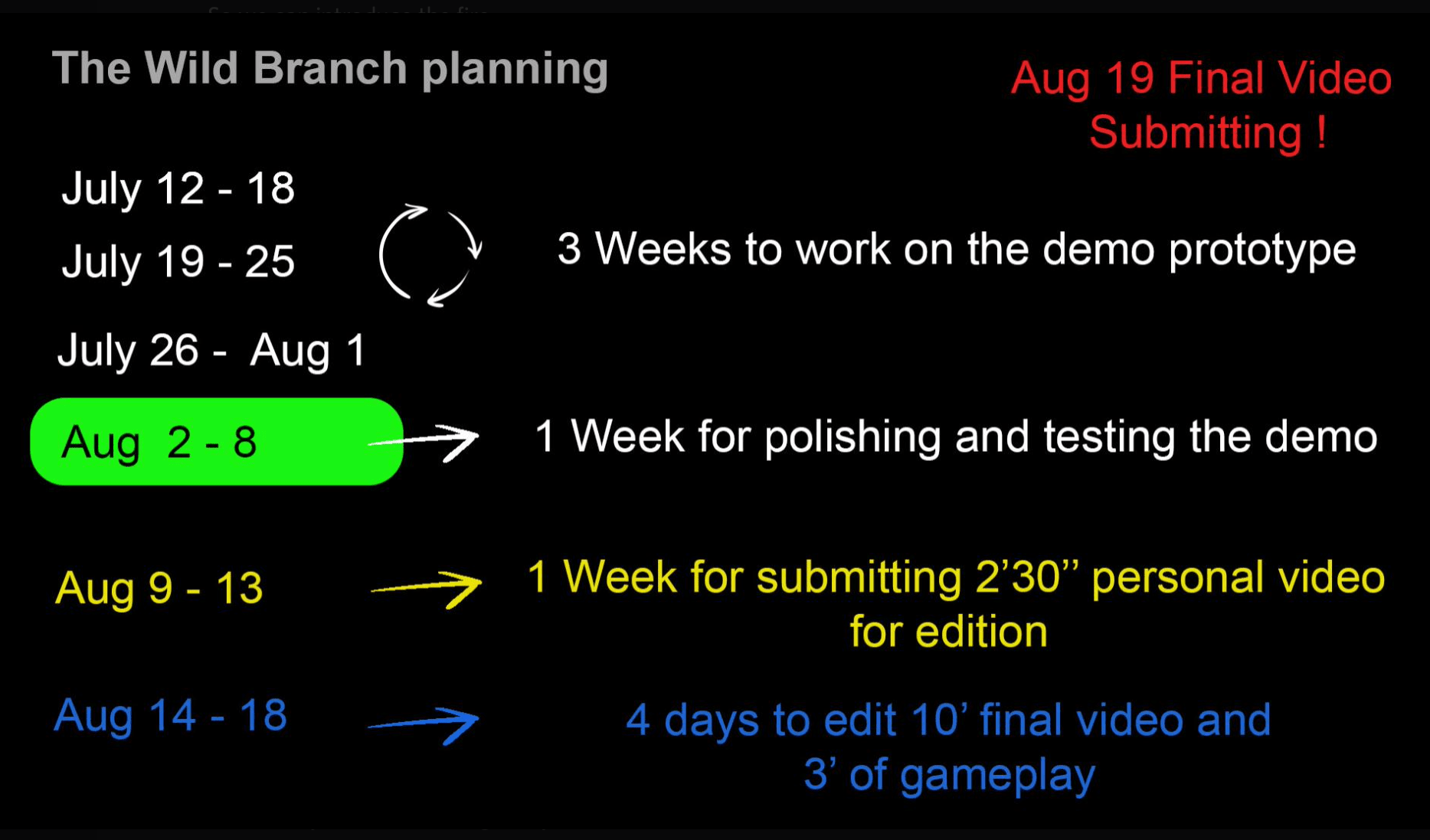
Below is our plan for the end of the module.
References

Babb, J., Hoda, R. and Norbjerg, J. 2014. Embedding Reflection and Learning into Agile Software Development. IEEE Software31(4), pp.51-57.

Cote, A. C. and Harris, B. C. (2021). The cruel optimism of “good crunch”: How game industry discourses perpetuate unsustainable labor practices. New Media & Society, p.146. Available at: https://journals.sagepub.com/doi/pdf/10.1177/14614448211014213

Edholm, H., Lidström, M., Steghöfer, J. P. and Burden, H. 2017. Crunch time: The reasons and effects of unpaid overtime in the games industry. In 2017 IEEE/ACM 39th International Conference on Software Engineering: Software Engineering in Practice Track (ICSE-SEIP), pp. 43-52. IEEE.

Edery, D and Cook, D. 2010. Spry Fox; Innovating In Your Pants – Part 1 Available at : https://flex.falmouth.ac.uk/courses/913/pages/week-9-spry-fox-innovate-in-your-pants?module_item_id=54740 [Accessed 23/07/2021]

King, W. 2021. Hi9 & Business Start-Up. Available at : https://flex.falmouth.ac.uk/courses/913/pages/week-9-hi9-and-business-start-up?module_item_id=54742 [Accessed 27/07/2021]

Full List of Figures

Figure 1 : Norton 2021. trees/foliage/mountains/background – added to Unity Playground
Categories
Personal Development

Ralphy and other Character Prototypes

Here you will find the transformation of Ralphy, first being re-placed by a working puppet from Adobe Character Animator, which has already been created and rigged professionally.

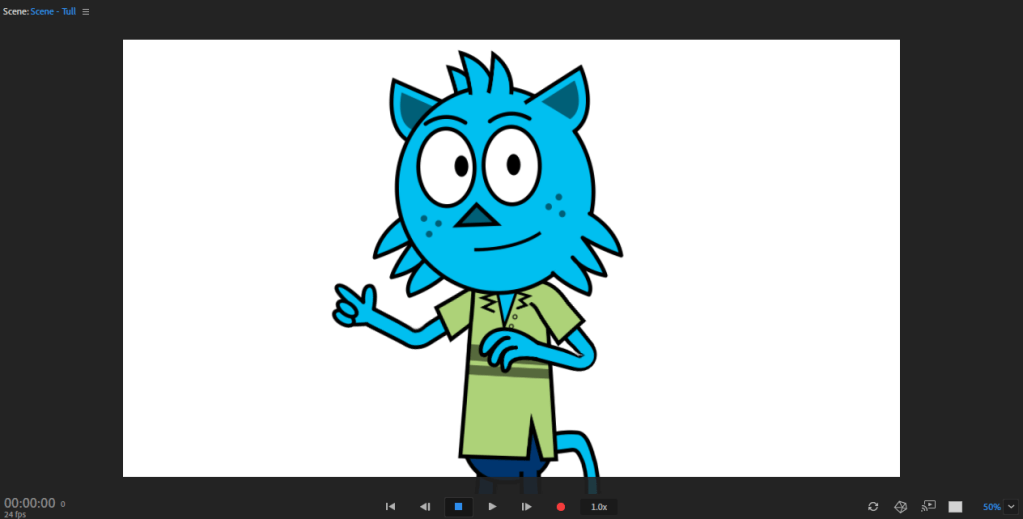
The puppet below is called Tull. He is a cat that has many facial expressions and arm movements, this is my starting point!

Adobe Character Animator 2021 Tull – Expressive Cat Puppet

1st SMART goal – put into action!

To get proficient with Adobe Character Animator.

I have a small list, to kick start my development;

  • 1st choose one or two puppets that not only has clear facial expressions, but arm movement to.
  • 2nd create a new background, with scenic layers, which can be manipulated later on (in-keeping with part of SMART goal 2).
  • 3rd re – create Ralphy as a puppet, to do so I must dissect each part, place on individual layers. This will enable each body part to move on its own, this will only work if they are labelled correctly.
  • 4th then to finally place Ralphy as a puppet in re-placement of Tull the cat…and observe how he looks and moves, for the initial stages of development.

Initial Concerns

Labelling the parts correctly; as Ralphy is an original character created on one layer, I am unsure how long this may take? After cloning Ralphy it should be generally, quite straight forwards, although if this is done wrong this could greatly effect my progress with my development for this application.

But I must remember to keep practicing Kanban, throughout the Masters Degree, as it helps me relax, and refocus on taking one step at a time. (already mentioned in Week 1, GDD710 – module 1)

“The motto is: work on your problems first before going on to new work.”

(Leopold 2015 : 20)

This helps to ground my thoughts, before I get carried away with focusing on new applications or tools, that I do not need to engage with right now. It is important I don’t get distracted with any other creative concepts at this point!

Categories
GDD710 - Module 1

Agile Practice

Week 10.1 – 14th April. 2021

This week we are asked to delve deeper into Agile Practice, and to get a better understanding of how important this method is, when applying it, especially to a large project and when working on commercial projects.

Project management skills, is what we have been asked to develop further, as this is what will be required in some of our up coming modules.

We are starting this week with a talk from Belinda Waldock who will show us, from looking at her professional experience as an Agile coach who supports SMEs, and helps them to adopt an Agile practice.  

She explains; “the Agile Method evolved, because the Linear approach to creating software was not working, due to time constraints, projects were taking to long to complete, and when a project was finally finished, the client would not be happy as to much time had past, and what they wanted had changed.

(Waldock, B. 2021)

She continues to explain, that from this action, it helped the new method of the Agile approach to be put into place. They adopted a new frame work which would work, with many iterative stages, they were as follows;

  • Discussion
  • Design
  • Construct

From putting this method into action the client is sent this “little bit of software,” which keeps them happy as they are being kept in the loop and by doing so, feed back is given for the incremental changes, which helps to keep the project on track. From this the software developers has a clarified concept of things that need to be included, what can be scrapped, and what can be developed.

Just to note; this means the software developers would not have used up all there resources, or budget, which means they have the time and money left incase anything changed last minute or went wrong, they would still not be out of profit, or resources which is valuable to projects like this.

Process

This is what I have been putting into practice when working on the Trello board. Having everything laid out clearly which shows, what’s being worked on, what needs to be done, and what has been completed. This part of the process is actually really helping to guide me through this term, and allow me to keep organised with staying on top of the workload.

I suppose if we were analysing the Agile approach, we would think about the end goal been the marathon and all the sprints thats are in-between, are what makes up the marathon, so by just focusing on one sprint, we are closer to reaching the end result.

Types of Agile

The methodology that I am incorporating into my thoughts and my process is Kanban. An agile approach, which allows you to focus on one thing at a time, and by doing so, tasks for me seem to be completed a lot quicker.

Although I do still struggle sometimes, with spending too long on one area for example; practical, which leaves less time for reading or research. But I am working hard to keep enforcing this method into my practice.

Week 10.2 – 16th April. 2021

Envisioning ( Product Planning)

After watching Alcwyn Parkers video on envisioning, I feel I have a clearer idea of understanding the importance of product planning. From looking at his research into Kenneth Rubins ‘Essential Scrum‘, I have taken a deeper look into the meaning of envisioning through the magazine article ‘Envisioning Desirements,’ by Robert R Hoffman and Michael J McCloskey.

The goal of the Envisioning Desirements Method (EDM) is to develop a list of “things we could make now that will not rupture the procurement plan or the budget” and “things we can make and add in the future but that we must allow for now in the present build so that the system can be easily upgraded.”

(Hoffman and McCloskey 2013)

My translation of this quote is more simply put as; to build small things now, that won’t put them out of pocket, and which can easily be manipulated in the future.

They explain the reason for the change in the name, this helps them to find a way, by the using results from different human-centered technologies.

Humancentred is an approach that is used to design interactive systems, that are accessible and useful with a close focus on the users requirements. They research into their needs and find out what they specifically want.

Activities Required to Complete the Envisioning Process;

Envision Activities (Product Planning)
INPUTSOUTPUTS
Initial Idea or Pivoted
Idea
Product Vision
(this needs to be explained in a single concise paragraph)
Planning HorizonProduct Backlog
Completion DateProduct Roadmap
Budget/ ResourceOther Artefacts
Confidence Threshold

Week 10.3 – 18th April. 2021

Estimation

From following on with the scrum agile framework, we are asked to research into scrum estimation, and to look at; how to apply estimation techniques, to either our individual practices or how to incorporate them into a team project.

Alcwyn Parker’s video reveals that there are a few different agile techniques, that can be applied to your practice, but the key is to work out how much time you have to practice the techniques.

The Three principles are;

  • How many features will be completed?
  • When will they be done?
  • How much will this cost?

My understanding of this process, is getting to know the skills and weaknesses of your team, and then re-evaluate the time it takes for them to complete a certain feature. Alcwyn quotes;

These techniques require practice but over time it is possible to hone your estimation skills to be more precise and accurate. In a team context, the more mature the team the easier it becomes to estimate how long units of development will take.

(Parker, A. 2021)

He continues to clarify the process; how to convert tasks from the backlog into story points?

This should have already been completed in the envisioning process.

But to go into more detail; Story points is a technique how to estimate, the time required for the task, from evaluating the PBI (product backlog item).

  • The amount of work needed to carry out the task?
  • How much risk and uncertainty are involved?
  • How complicated is the task?

How to Apply to my practice?

If I incorporated this scrum estimation technique into my own practice, I think it would be quite straight forward, but that still depends on the project involved..?

I would like to think if I had to draw assets, for a game, game art, find sound, work out a logo, or work on basic animatics, I should be able to have a really good estimate on the time needed to create these parts, and with knowing the applications I use quite well, and being aware of how quickly they run.

Risk

I wouldn’t have thought there would be any, although the biggest thing that could hold up time is if the application that I choose, needs an update?

But this should not pop up, as I am constantly aware what Adobe Creative Cloud is like, as I have used many of the applications now, especially throughout Indie Game Dev. For this reason, I have advanced a lot more with my current applications, there by I am a lot quicker, and can put the above into action in a small time frame.

Complications – This wouldn’t apply for the things above, because I know where to look if I get stuck. Plus I always allow extra time for a new skill.

If for instance that I wanted to learn more about character rigging, although I have learnt how to create animatics, and a better idea of time frames, I don’t yet know anything about character rigging, thereby I would allow at least 8hours( 1 full working day) when working on a two week RI project.

This will help me stay on board with my smart goals when studying a new skill for one hour at a time, then taking a break and put into practice. By using this method, I can acquire a more thorough way of learning, which should aid my development in this area.

References

Parker, Alcwyn 2021 Envisioning. Available at : https://flex.falmouth.ac.uk/courses/911/pages/week-10-envisioning?module_item_id=49213 [accessed 16/04/21]

PARKER, Alcwyn 2021 Estimation. Available at : https://flex.falmouth.ac.uk/courses/911/pages/week-10-estimation?module_item_id=49214 [accessed 18/04/21]

Rubin, KS. (2013) Essential Scrum. Upper Saddle River, Munich [u.a.]: Addison-Wesley.

Waldock, B. 2015 Being Agile in Business: Discover faster, smarter, leaner ways to work. FT Press.

Waldock, B. 2021 Belinda Waldock on the Agile Movement and Practice. Available at : https://flex.falmouth.ac.uk/courses/911/pages/week-10-belinda-waldock-on-the-agile-movement-and-practice?module_item_id=49212 [accessed 15/04/21]

HOFFMAN, Robert R. and Michael McCloskey. 2013. ‘Envisioning Desirements‘ 28(4).

Categories
GDD710 - Module 1

The Big Reading Week.

Week 6.1 – 10th March. 2021

The Retrospective

After looking at the article heartbeat retrospective, and closely at the common pitfalls, I understand this to be a workshop of reflection, structured with the steps as shown below;

  • Regular meetings with your team to simply debrief.
  • Everyone should feel comfortable to speak, just highlight a few areas, speak the facts only.
  • Discuss the relevant areas that are currently affecting the iteration process.
  • Have a couple solutions to work with, to keep simple.

Their are three main areas, that are considered throughout the retrospective;

  • What should be started?
  • What should be stopped?
  • What should be continued?

My Start item will be: (marked with two stars **)

  • Reading one journal article a week to inform your practice
  • Writing a progress summary in your journal before you attend the webinar
  • Writing a weekly plan to help structure the work **

My Stop item will be:(marked with two stars**)

  • Burning the candle at both ends **
  • Working in a silo and not seeking advice and support from peers
  • Leaving it until the last minute to write in the journal

My Continue item will be: (marked with two stars**)

  • Posting in the forums on a regular basis
  • Follow tutorials as part of the self-directed practice**
  • Attending the webinars

Both the start and stop items are used automatically when my SMART goals were noted, as they seem to follow through what I have put in place.

Retrospective is key to reflect on what happened, any iterative processes put in place which didn’t work, analyse why and devise a plan to avoid happening next time around. But keep simple.

Session 1 Rapid Ideation – Reflection

Looking back on the development of rapid ideation session one, I know for sure that there was room for improvement. I wish I had, had my SMART goals in place, and only learnt a little about 2D animation for example, and not to of tried using so many new applications, which just holted my progress altogether, and made me question, if I was even capable of learning a new technical skill this quickly.

Pages and Posts

That doesn’t even include, the fact of which I was struggling with writing a post on here, and realising I had my entries as pages, not posts. This was a big turning point for me, after working this out, I was able to add tags, and categories, to make my site more accessible. This is where I started to understand the need for an organised, well structured website.

Week 6.2 – 11th March. 2021

SMART – Ready – SET – GO !!

To reiterate, in this coming webinar, when we get out next rapid ideation tool to experiment with, I am going to do things differently.

I have my goals in place to help with organising my time:

  • To do an equal amount of research; including reading, writing, watching, linkedIn learning, and practical.
  • Make sure to stick with my idea, not to get distracted by all other possibilities.
  • To learn new technical skills for an hour at a time, break, and try out what I have just learnt, rather than jumping to far ahead!

Since making my self SMART goals, I have started to continue reading ‘Level up’, to understand more about the process of creating a game from scratch. This is where I put my organised schedule into action.


In Chapter 4 ( level 4 ) titled; ‘You Can Design a Game, but Can You Do the Paperwork?’
Scott Rogers states;

“It’s no crime to be a perfectionist, but many design issues can be thought out and designed on paper first before a single pixel is rendered or a line of code typed.”

(S, Rogers. 2014. p90)


This immediately grabbed my attention, my determination of trying to create something that will look amazing on screen, and helping to engineer a game/ app or animation that you just can’t leave alone, is all I seem to focus on!

This is exactly what I have done with with my personal development, and because of trying to add code, and bring Ralphy to life in only a few frames, it was impossible to get a decent animated character.


I think it might be worth going back to basics, sticking with drawing and scanning my work, ideas and laying out concepts on paper, before even thinking of bringing my illustrations to life.

After all this is what Briggs would do when he originally created ‘The Snowman‘, and he is one of the illustrators, who pays very close attention to adding emotion and movement behind all of his sketches, before even laying them out onto a storyboard.


Week 6.3 – 14th March. 2021

Points to remember

Rogers also discusses in his book ‘Level Up‘, how important it is to be mindful of your peers, as we all have our own limitations.

We first discussed this in week one, talking about Scrum agile framework …It’s vital we have someone in charge, ideally that can make sure that each person, (when in a team) is doing their part, and has been assigned the correct area, that matches their skill.
Other wise, this could dramatically hold everyone up, especially when that person doesn’t quite understand what is expected of them. 

Throughout this course, I feel like I am on the biggest learning curve ever, with excitement leading the way, I pinch myself just to check that what I am creating is real…and can be improved or developed in one way or another.

Kanban

I am now starting, very slowly, but surely to understand the nature of reflection. 
I have started to read another book, which my partner has actually recommended;

The Toyota Way : 14 Management Principles; from the Worlds Greatest Manufacturer.

This actually links onto the Kanban Method that I have been practicing.

The book reveals the methods and approaches, used in production;

Jidoka – Originated from an invention from Toyoda, a carpenter who made wooden spinning machines, and in 1894 the manual looms he started experimenting with, were low in cost, but worked better than his existing looms.

“designing operations and equipment so your workers are not tied to machines and are free to perform value added work.”

J K, Liker. 2004 P16

This step would lead to the creation of a much broader System!!

Toyoda; Unhappy with seeing his mother, grandmother and friends working so hard, this sent him down his next path, and took production to next level.

“He wanted to find a way to relieve them of this punishing labor, so he set out to develop power-driven looms.”

(J K, Liker. 2004 p16)

This intention was crucial, and helped to build TPS (Toyota Production System).

  • Jidoka (automation without human touch)
  • JIT ( Just In Time) – to order what parts you are running out of, just before you do runout.
  • Continuous Flow (focusing on today, and tomorrow)
  • Kaizen (change for the better)

This is what brings us to Taiichi Ohno – the founder of the TPS, (Toyota Production System), which has a strong focus on Jidoka, Toyoda’s sons approach JIT, (Just In Time) and his own discovery Continuous Flow. He also talks about Kanban and Kaizen.

He compares Kanban to a gas gauge that is built into the car – when it signals – you know you need to fill up. As for Kaizen, making tiny improvements is just as important when achieving a lean goal, which eliminates all waste, that adds cost without adding to value.

References

Heartbeat Retrospective (2020). Available at: https://bit.ly/3b17dtO [accessed 10 March 2021]

ROGERS, Scott. 2014. Level Up ; The Guide To Great Video Game Design. 2nd edn. John Wiley & Sons, Ltd.

LIKER, Jeffrey K. 2004. The Toyota Way ; 14 Management Principles from the Worlds Greatest Manufacturer. McGraw-Hill.

Categories
GDD710 - Module 1

Dkn Indie Game Blog

First Digital Illustration...
Figure 1: Norton 2016 First Digital Illustration

CRITICAL REFLECTIVE JOURNAL 

Week 1.1 – 22nd January. 2021

Time Management and Agile Development

We are first introduced to the two System Development Life Cycle methodologies, to allow us to understand time management and how to apply it through the Masters part time course, when working individually or collaborating with our teams on projects, otherwise know as Jams.

Waterfall Method

  • Plan – Define – Design – Build – Test – Deploy – Maintain

Although the Waterfall method is continuous, one key step that is missing is reflection. Without reflecting on your work, how will you ever know if there is something you could of improved on, or if you intended on making another version eg. a game, you would need to make a note of what worked and what didn’t and more importantly why certain elements was a success and what should be removed. 

Scrum Agile Framework

This method has 12 points to it, which is more fluid, especially having more customer engagement, communication and reflection.

I cannot apply either of these methods to any of the jobs that I have had in the past, however I can say that I would prefer working with the Scrum structure put in place. 

Gathering together to make a plan in a group, then each assigned individual tasks from a backlog of work to be completed within a set time, would be more straight forward if businesses put this method in place. 

Tasks would be more simple, communication would be improved, and everything in general would be much more productive. Working as one is much more enjoyable to, as it creates a great positive environment. 

Working together as one can create something more powerful. Listening to each other is the key to great creations. 

“We must be both open – minded and practical – good ideas can come from anywhere, but they are only good for us if they help us create better experiences.”

(Schell 2020: 15)

Schell, allows us to understand how to connect with one another psychologically. Listening deeply is part of the design process, not just to others, but to yourself. By doing so, you can evaluate your own experiences, and you can use that information to make your own judgement.

As Fook would say, analysing these experiences is how we, “learn directly from professional practice experience”, which allows us to develop our process with far more clarity, and know what direction to start with.

(Fook and Gardner 2007: 51)

Alternative Methods

We had been asked to research into other ways of working, with different techniques that are being put in place, and if we could relate them to our individual practices. For me, after looking into the Waterfall method and Scrum Agile Framework, I couldn’t see any any link between them.

However I have found one method that I can identify with, by how I am working currently to put my research of animation into action, with a successful outcome.

Kanban – This is not considered as an agile method, but the underlying issue is that you must; focus on what you are stuck on, and don’t try and learn something brand new until the first thing has been accomplished.

“The motto is: work on your problems first before going on to new work.”

(Leopold 2015: 20)

The Kanban method focuses on workflow, if any problems arise during production, it is brought to their attention straight away, and is dealt with.

To keep there clients happy, they only make a commitment to a goal that will be achieved, in order to build trust with them. But if for any reason they cannot reach the goal, they re look at their approach with the Kanban system over all.

Using this approach, my goal is to animate my book character Ralphy, I think this is an achievable goal, and I am looking forward to developing my knowledge of character animation.

If I am to start putting this new method into action, I will continue from what I have learnt so far from my personal development – see below.

  1. Watched a Linkedin Learning course; How to make a 2d character move; 2D animation principles, with Dermot OConner.
  2. Watched and practiced with Unity – completed an in-depth tutorial on Youtube with Jason WeimannHow to Make a Game – Unity Beginner Tutorial, and put into practice. (For more details please go to my home page).

Week 1.2 – 23rd January. 2021

Creative Activity – Custom Avatar

  •  The Puzzle – A jigsaw puzzle I started with my mum, and discovered the artist was an Illustrator. I did have an image in my head that illustrators, just did pen and ink, black and white drawings. But that is not the case. I looked up illustration courses took my first Children’s Book Illustration course from there.
  • Small Wacom Tablet – The first thing I bought to start my Digital Illustration course still studying with London Art College at this point. This kept me going, whilst writing and Illustrating my Children’s books. 
  • iPad and Playstation control – Placed side by side, to show they are equal, and that I do just as much gaming on Playstation, as I do my iPad. 
  • Mug of Tea and Bueno – With out these two, whilst drawing, or studying…I can’t focus! 
  • Gloves – Rested on top of my mug to show the Huion pen computer is what I currently use. It really is amazing and through the whole journey when illustrating my Children’s books, was my dogs. 
  • Storm and Sky – My little friends, very supportive of my work.
Figure 2: Norton 2021 Custom Avatar

I have to say this activity was so much fun to take part in, especially for a gradual introduction to each other, and understanding what we each enjoy. I thought this was a great way to speak to each other for the first time.

References

FOOK, Jan and Fiona GARDNER. 2007. Practising Critical Reflection : A Resource Handbook. Maidenhead : McGraw-Hill Education

LEOPOLD, Klaus and Siegfried KALTENCKER. 2015. Kanban Change Leadership : Creating a Culture of Continuous Improvement. John Wiley & Sons, Incorporated.

O’ CONNER, Dermot. 2014. ‘Linkedin Learning’ Learning 2D Animation Principles. Available at : https://www.linkedin.com/learning/learning-2d-animation-principles?u=56738929 [accessed 18/02/21].

SCHELL, Jesse. 2020. The Art of Game Design; A Book of Lenses. 3rd edn. Tailor & Francis Group.

WEIMANN, Jason. 2020. How to Make a Game – Unity Beginner Tutorial. Available at : https://www.youtube.com/watch?v=OR0e-1UBEOU [accessed 10/12/20]

Full List of Figures

Figure 1 : Norton 2016 First Digital Illustration

Figure 2: Norton 2021 Custom Avatar