Categories
GDD730 - Module 2

The beginning of Rapid Ideation Stage 1…

Week 2.1 – 4th June. 2021

Global Game Jam

The reading I began with this week is, Video Game Development in a Rush: A Survey of the Global Game Jam Participants. They focus on the effects of time pressure, to the 48hour Global Game Jam Hackathon.

From the 198 responses, they find that;

“Iterative brainstorming is the most popular method for conceptualizing initial requirements; regular communication, internal playtesting, and dynamic and proactive planning are the most common quality assurance activities; and familiarity with agile development has a weak correlation with perception of success in the GGJ.” 

(Borg, M. 2020: 246-259)

After reading about the iterative processes, we put our rapid ideation plan into action, after all, if this is to be the most popular part which helps with communication within the team from day 1, then I think it’s important to encourage new teams to put this into practice from the moment they are formed.

Team Name

For our team name we all had a few ideas, and jotted them down onto Discord, however afterwards I looked into this article; What’s in a Name? A Lot When It Comes to Innovation”.

This helped to clarify, that we shouldn’t be focusing on fun and creative names, but rather think seriously about our main aim for this team project, and make it clear through a simple team name.

The best names are boring names
Executives charged with launching new business groups might be tempted to ask which of these naming systems is best. But it’s not as simple as choosing between good, better, and best. To find the right name, consider three elements:

(Pollak, L. and Wakid, K. 2011)

Points to remember

  • The company’s openness to long-term growth opportunities
  • The message you need to send about the role of the group
  • The types of growth projects you want your team to work on

We decided on; The Wild Branch. This was a name we voted on, and for me I interpreted it as we would be exploring unique sustainability concepts, a lot of them involved trees, plants and regrowth. Which is the same way in which we would like the game to go, to continue growing, allowing its roots to go deeper into the ground, becoming strong and stable.

Weekly Challenge – Forming Storming and Norming

Firstly we start the week creating a Rapid Ideation Plan.

We decided to create a google document, that would cover all the areas, for the group working ideation process, which follows with;

  1. Team Composition
  2. File storage / Version Control
  3. Communication Strategy
  4. Individual Tasks
  5. Group Schedule
  6. Tools and techniques
  7. Performance Goals

1) Team Composition

The composition below is the updated one from week 3, as everything had to be amended due to a team member leaving.

(Figure 1: Team Composition 2021 )

2) File storage /Version Control

Between the current team of 5 we decide to continue using Github, as we all had it set up and installed, and thought it would be the best way of backing up all the files, and assets for the development of the game.

3) Communication

We all set up Discord, another thing I have never used before, but I have found it to be really helpful for our team of 5, especially with some being in different timezones.

4) Individual Tasks

We have chosen to stick with Trello, a simple Kanban Board, to help you keep on top with everything that needs to be completed, is currently being working on, or has been completed.

(Figure 2: Trello 2021 – Individual tasks)

5) Group Schedule

Our group schedule consisted of a meeting every week on Wednesday 12:00pm, and every Monday with our group supervisor in the evening at 6:00 pm, as it suited everyone.

6) Tools and Techniques

Another new tool Miro was set up, that I was not familiar with. It allows you to write anywhere, it does not seem as clear to follow as the Trello Board.

I found myself not knowing whether I was coming or going. Everyone was writing ideas on there, from all different angles of thought, and no clear area had been narrowed down. Finally everyone came to a decision on the theme Sustainability.

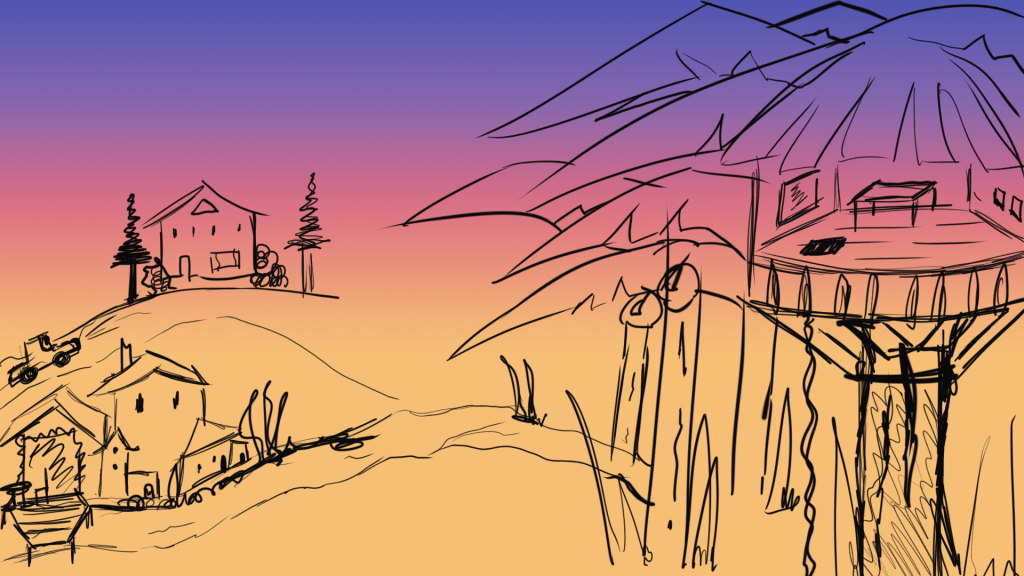
My game concepts for Sustainability
7) Performance goals

  • To move forwards together, and hit our deadlines as a team.
  • To make a few simple charts, so that the team can visualise all relevant data, timescales and stay organised.
  • To support each other !

Week 2.2 – 8th June. 2021

One of the other readings that interested me was investigated by Oakley, Felder, Brent, and Elhaji, in their academic report; Turning Student Groups into Effective Teams.

In their research, they help you to get a better understanding of how important it is, that as soon as the new team is formed, it is best practice to create a Team Policies Statement.

They also state it is very helpful to allow everyone to write about: expectations of what each individual can achieve within the time period.

To make note of…

I personally think this is a brilliant idea, and wish we had done this from the start. This would allow everyone then, to formulate an idea of the style you would be working on, how fast you can achieve each step, if the steps you take are necessary, or if the roles should be reversed, and most importantly if your opinions differ, and how to communicate clearly to avoid clashing.

Cooperative learning has been repeatedly shown to have strong positive effects on almost every

conceivable learning outcome.

Simply putting students in groups to work on assignments is not a sufficient condition for achieving these benefits, however.

Unless the instructor takes steps to assure that the groups develop the attributes associated with

high-performance teams, the group learning experience is likely to be ineffective and may be disastrous.

(Oakley, B., Felder, R.M, Brent, R. and Elhaji, I. 2004: 2:1)

References

BORG, M. et al. 2020. ‘Video Game Development in a Rush: A Survey of the Global Game Jam Participants’. IEEE Transactions on Games, 12(3), 246-259.

OAKLEY, B., FELDER, R.M, BRENT, R. and ELHAJI, I. 2004. ‘Turning Student Groups into Effective Teams’. New Forums Press, 2(1).

POLLAK, L. and WAKID, K. 2011. What’s in a Name? A Lot When It Comes to Innovation. Harvard Business Review.  

Full List of Tools

Trello Inc. 2021.

Miro. 2011

Full List of Figures

Figure 1: Team Composition 2021

Figure 2: Trello 2021 – Individual tasks

Figure 3: Miro 2021 Teams Concepts

Categories
GDD730 - Module 2

Co-Creative Design & Development Practice

Week 1.1 – 28th May. 2021

The second module’s primary focuses will be; collaboration working with a new mix of concepts with fresh perspectives, communication between our group of 5, needing to keep open minded and be ready to change direction, and explore innovation to create a new working prototype, which is a combination of all of our skills.

Aim: to work in a multidisciplinary team to design and develop an interactive prototype.

Our newly formed groups must pay close attention to the below;

  • How the project is managed.
  • What tools and frameworks are selected for communication and version control.
  • How to maintain a unified product vision throughout the development process.

Why Teams?

I started to read, The Wisdom of Teams, and although every job I have had in the past, always had involved some form of teamwork, because I have worked on my own for a while now, after seeing what I could achieve with writing and illustrating my own children’s books, and all the different home study courses I have completed, I suppose thats why now I am a little concerned!?

However, reading further into the chapter, I found the below quote, and it has made me re-think about this and what real teamwork is.

“A team is not just any group working together”

(Katzenbach and Smith 2015: 15)

After looking deeper into the specific chapter; Why Teams?, I have gained a better understanding that the experiences I have had in the past was not entirely team work. (I was not in a small group, and individuals were always doing there own thing, but not reflecting together, or recognising the interests and achievements of others)

Teamwork represents a set of values that encourages behaviors such as listening and constructively responding to points of view expressed by others, giving others the benefit of the doubt, providing support to those who need it, and recognizing the interests and achievements of others.

(Katzenbach and Smith 2015: 15)

Katzenbach and Smith explains, that it is only when we practice working in a team, that it can help everyone communicate and work more effectively. It also highlights the performance of the individuals and the effects it has on the whole organization.

I do work well with people, but I think this is my first time working in a small group of 5, and after watching Al parkers video, linked with team work, and how to make a high performing team, I do have a better idea of what and how to approach this new task.

Team Formation

When researching further into team work, and new ways to set up your team, one article that caught my attention, dealt with team formation. I found this really interesting, as they experiment with different ways of setting up a team.

  • 1)Teams were either going to be decided by the instructor,

  • 2) By the students themselves,

  • 3) Randomly chosen, by a computer programme.

The 3 Methods

The 3 methods, all had a link to helping the students connect better with one another, which overall was a positive thing to make note of, but the one method that they found to be the best way of helping students form a team, was by allowing the tutors to choose the individuals.

They found that teams designed by the course instructor were more diverse, but that students in these teams performed no better than their peers in self-selected or randomly assigned teams.

(Pociask, Gross and Shih 2017)

Week 1.2 – 1st June. 2021

Activity – Career Profiler

For the start of this module, our icebreaker activity consisted of us taking a personality test, and sharing the results with the rest of the students, and to reflect back on them. This is meant to help with each individuals skill set, making sure that each team of 5 has someone from each area, such as; programming, illustrating, animating, 2D/ 3D character design, background design or layout, storyboarding, a group leader, team working skills, organisation, presenting…the list is endless.

CP 1st.png
CP2.png
CP3.png

Automattic – WordPress.com – Broken Window Theory

This is what Automattic try to follow, The broken windows theory, they try to make sure all the little things are done well consistently, because this is what could effect the business massively.

By regularly fixing small things, you prevent bigger problems from starting. It’s similar to the platitudes ‘‘nip it in the bud’’.

(Berkun 2013: 98)

How to apply to my practice?

I want to apply the broken window theory to my practice, because I think that it is something that is not always thought about when working in a team, so I am going to focus on the smaller tasks, and check they are correct, look right and work well, before moving onto the next thing.

This is almost another Kanban method style, however taking one step at a time to start with, but making sure that all those “one steps”, are properly followed through, for a consistent and reliable end product. However, in my case for this second term it is all about team work, and making a new prototype that is fully functional, and pitching the concept to a panel of professionals.

Creating Atmosphere with the use of Humour

I just had to add the quote below, especially as I feel it is relevant to me, and my personality, and what I bring to the new team, other than just skills.

When I get people laughing, its a great feeling, the atmosphere that can be created in the room, or whilst in conversation, with adding a slightly humorous remark, or playing on the words that someone just mentioned, can light up the room and make everyone forget about any problems they may have.

I also think it is a fantastic way to motivate those that might not be keen on an idea, to just give it a try!

You get more mileage if you make people laugh, even if it’s at themselves, at the same time you’re reminding them of something they’ve forgotten.

(Berkun 2013: 82)

References

KATZENBACH, Jon R and Douglas K, SMITH. 2015. The Wisdom of Teams: Creating the High-Performance Organization. Boston; Harvard Business Review Press.

Truity. 2021. Free Personality Tests and Career Assessments – Truity. [online] Available at: https://www.truity.com (Links to an external site.) [Accessed 01/06/ 2021].

PARKER, A. 2019. Working in Teams. https://flex.falmouth.ac.uk/courses/913/pages/week-1-an-introduction-to-teams?module_item_id=49985 [Accessed 02/06/2021].

POCIASK, Sarah, David GROSS and Mei-Yau SHIH. 2017. ‘Does Team Formation Impact Student Performance, Effort and Attitudes in a College Course Employing Collaborative Learning?’. Journal of the Scholarship of Teaching and Learning, 17(3), 19-33.

Berkun, Scott. 2013. ‘The Year Without Pants : WordPress.com and the Future of Work’. Available at: https://ebookcentral.proquest.com/lib/falmouth-ebooks/detail.action?docID=1357223. [Accessed 02/06/2021]